Diploma in Gynecologic Endoscopic Surgery, MClinEmbryol,
EFOG-EBCOG., EFRM-ESHRE/EBCOG.
Figure 1 Normal values for semen analysis according to the World Health Organization 2021 recommendations
Semen Analysis
Semen analysis has long been the basic test for men with fertility problems. Its criteria are set by the World Health Organization, which has added data and updated them over time. The latest update was in 2021 (B.E. 2564).
A semen analysis includes many different measurements. It takes 2-3 hours to complete every part. These include volume, sperm concentration, %Motility (the percentage of moving sperm) and %Morphology (the percentage of normally shaped sperm). There are also other values that may be less important, such as %Vitality (the percentage of live sperm).
Today there are also more detailed sperm tests, such as chromosome number (a normal sperm has 23 chromosomes, half the number in a body cell) and %DNA fragmentation.
Once we have the results, we analyze whether your sperm are normal, or how abnormal they are. This tells us whether basic treatment such as IUI or conventional IVF is possible, whether you need ICSI, or whether you may even need donor sperm.
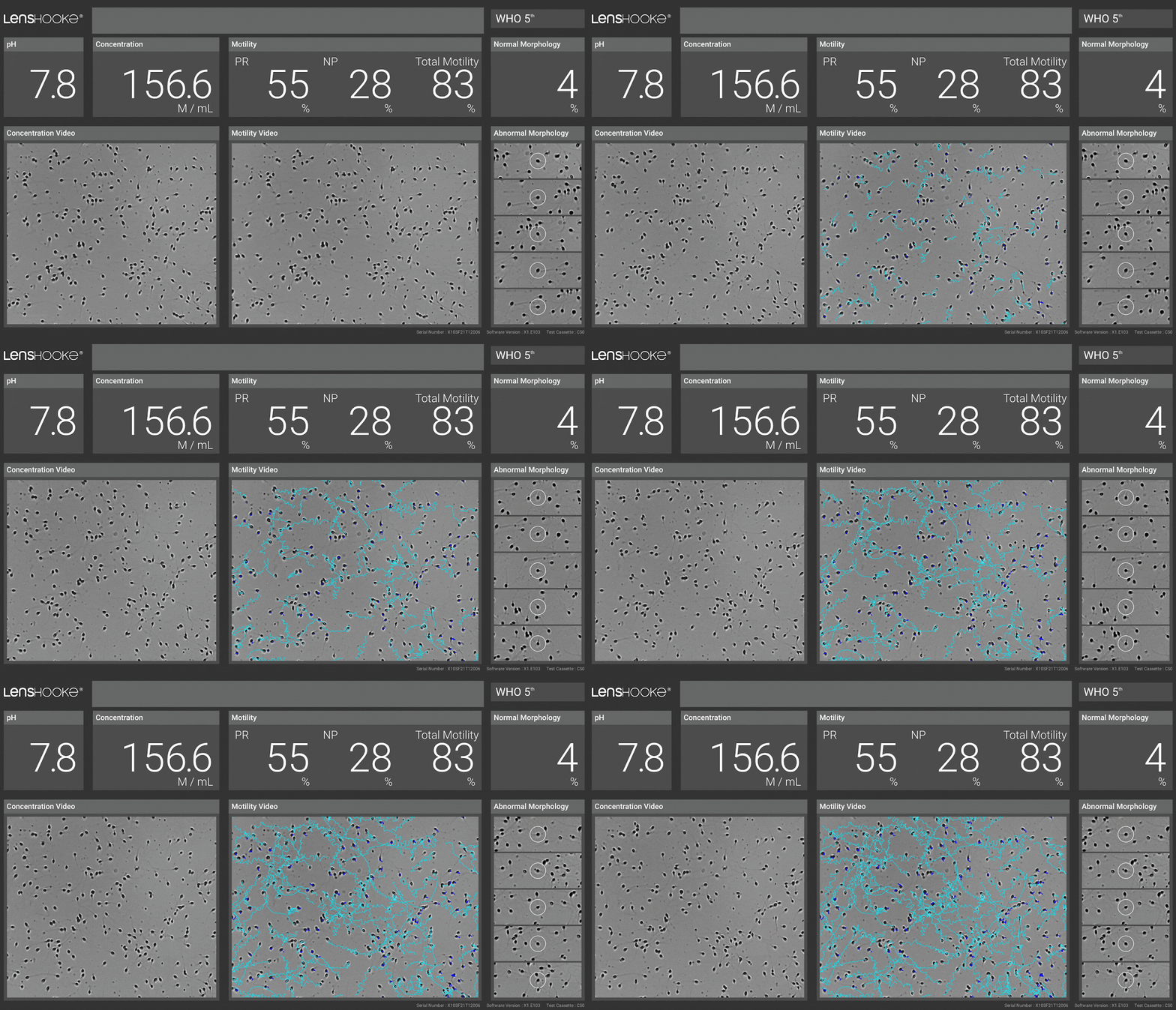
As you can see, a standard semen analysis today takes a lot of resources and time before all the results are ready. But innovation has moved on. Everyone's smartphone camera now has enough magnification to give sharp images, and artificial intelligence (AI) is getting closer to the human brain every day. So AI is now being used to help analyze sperm. At Life by Dr. Pat, we use Lenshooke® to analyze our patients' semen. The full semen analysis results come out in less than 10 minutes, and patients also get a video clip showing what their own sperm look like, as in the example video below.
Figure 2 Video from the AI semen analysis used at LIFE by Dr. Pat clinic
Leave a comment
* This article is general health education. Diagnosis and treatment should be guided by your doctor. Results vary with age and individual medical factors.
Dr. Patsama Vichinsartvichai, MD, MClinEmbryol, EFOG-EBCOG, EFRM-ESHRE/EBCOG, FACOG is a board-certified reproductive endocrinology & infertility specialist, former head of the Vajira IVF unit at Navamindradhiraj University, and founder of LIFE by Dr. Pat in Bangkok. His published research focuses on the dysmorphic (T-shaped) uterus and uterine-factor infertility.
 LIFE by Dr. Pat