When should IVF stimulation start? Conventional cycle day 2-3 versus random-start protocols: how the outcomes compare and who benefits from starting on any day.
✍️ Written by Dr. Patsama Vichinsartvichai, MD, MClinEmbryol, EFOG-EBCOG, EFRM-ESHRE/EBCOG, FACOG — reproductive medicine specialist
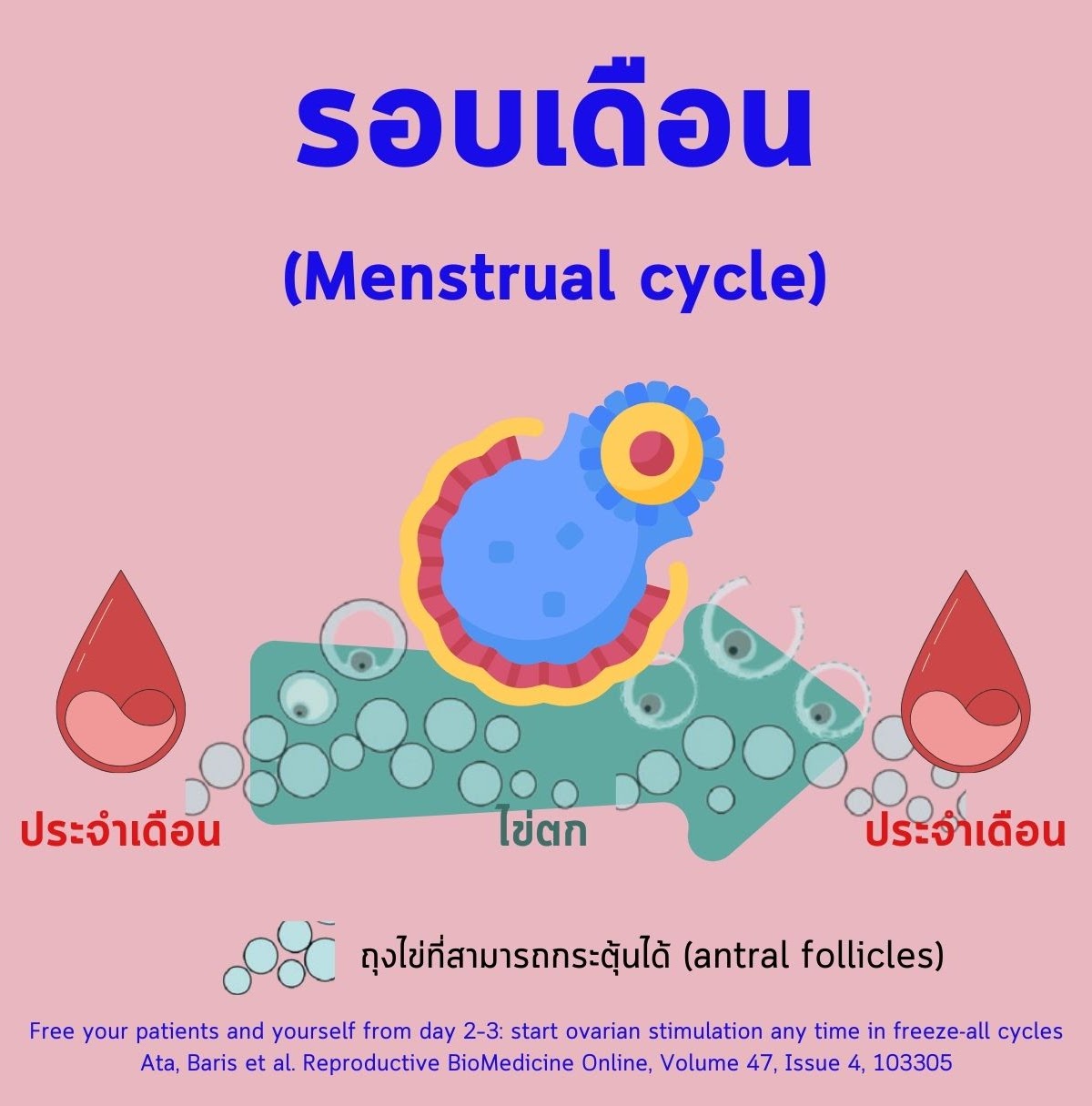
Ovarian stimulation is the starting point of infertility treatment with in vitro fertilization (IVF/ICSI). Ovarian stimulation means giving high doses of hormones for 8-10 days so that many antral follicles grow gradually at the same time. This gives more eggs to fertilize, and embryos can then be selected for transfer back into the uterine cavity, as shown in Figure 1.
Figure 1. Follicle development in a natural menstrual cycle, from the antral follicle stage to ovulation. Normally there are many antral follicles, but only one follicle grows until it ovulates.
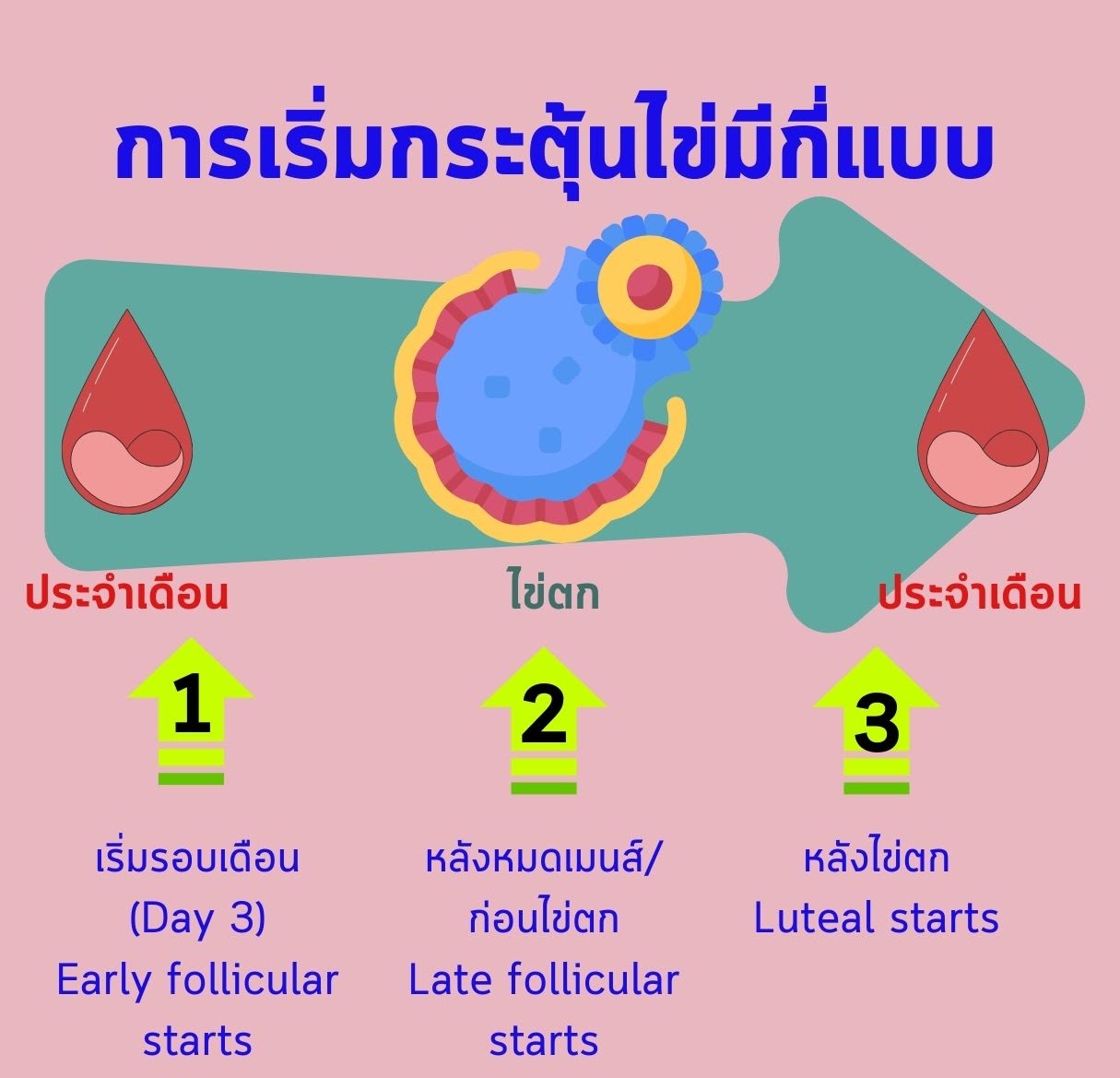
In the past, embryo freezing technology was not yet very good, and preimplantation genetic testing (PGT) was not yet widely used. Embryos were usually transferred 3-5 days after egg retrieval, which is called a fresh transfer. Because of this, conventional ovarian stimulation mimicked natural follicle development in women and started around day 2-3 of the menstrual cycle, as shown in Figure 2, arrow 1.
Figure 2. Options for the day to start ovarian stimulation in an IVF/ICSI cycle: 1. the standard start within day 2-3 of the menstrual cycle (early follicular starts); 2. a start after the period ends but before ovulation (late follicular starts); and 3. a start after ovulation (luteal starts).
Embryo freezing has since become widespread, and embryo chromosome testing has become almost routine. As a result, fresh embryo transfer plays a smaller role, and there is less need to start stimulation during the period. There is also evidence that antral follicles are present throughout every phase of the menstrual cycle, and research began to report starting stimulation after ovulation (luteal starts), as shown in Figure 2, arrow 3. Later, ovarian stimulation was used to freeze eggs or embryos for cancer patients before chemotherapy, when there is little time before cancer treatment must begin. So stimulation was started right away, no matter which day of the cycle the patient was on (random starts). This means a patient may start stimulation after the period has ended but before ovulation (late follicular starts), as shown in Figure 2, arrow 2.
1. Starting Stimulation Early in the Menstrual Cycle (Early Follicular Starts)
This is the standard way to start. Stimulation begins around day 2-3 of the menstrual cycle (counting the first day of the period as day 1). Gonadotropin hormones are injected to stimulate the follicles to grow, with regular monitoring.
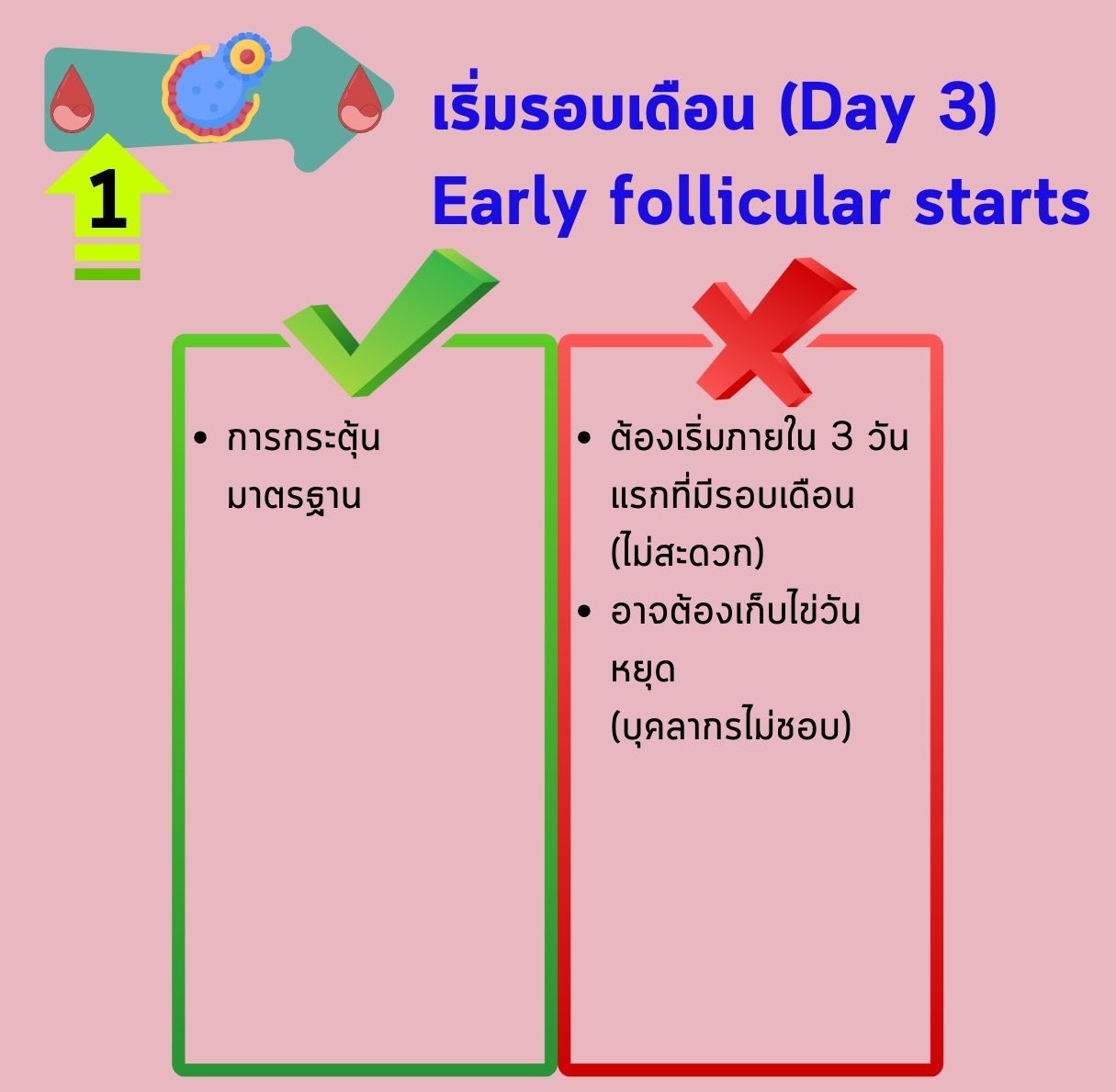
Figure 3. Advantages and disadvantages of starting ovarian stimulation early in the menstrual cycle (early follicular starts).
The advantage of early follicular starts is that this method has been used for a long time. There is data on success rates, effects on eggs and embryos, and also on pregnancy rates, miscarriage and pregnancy complications. Most treating doctors are confident in managing patients this way. However, this type of start must begin within the first 3 days of the period, which may be inconvenient for many patients. In addition, the egg retrieval day cannot be planned in advance, so the retrieval may fall on a holiday (Figure 3).
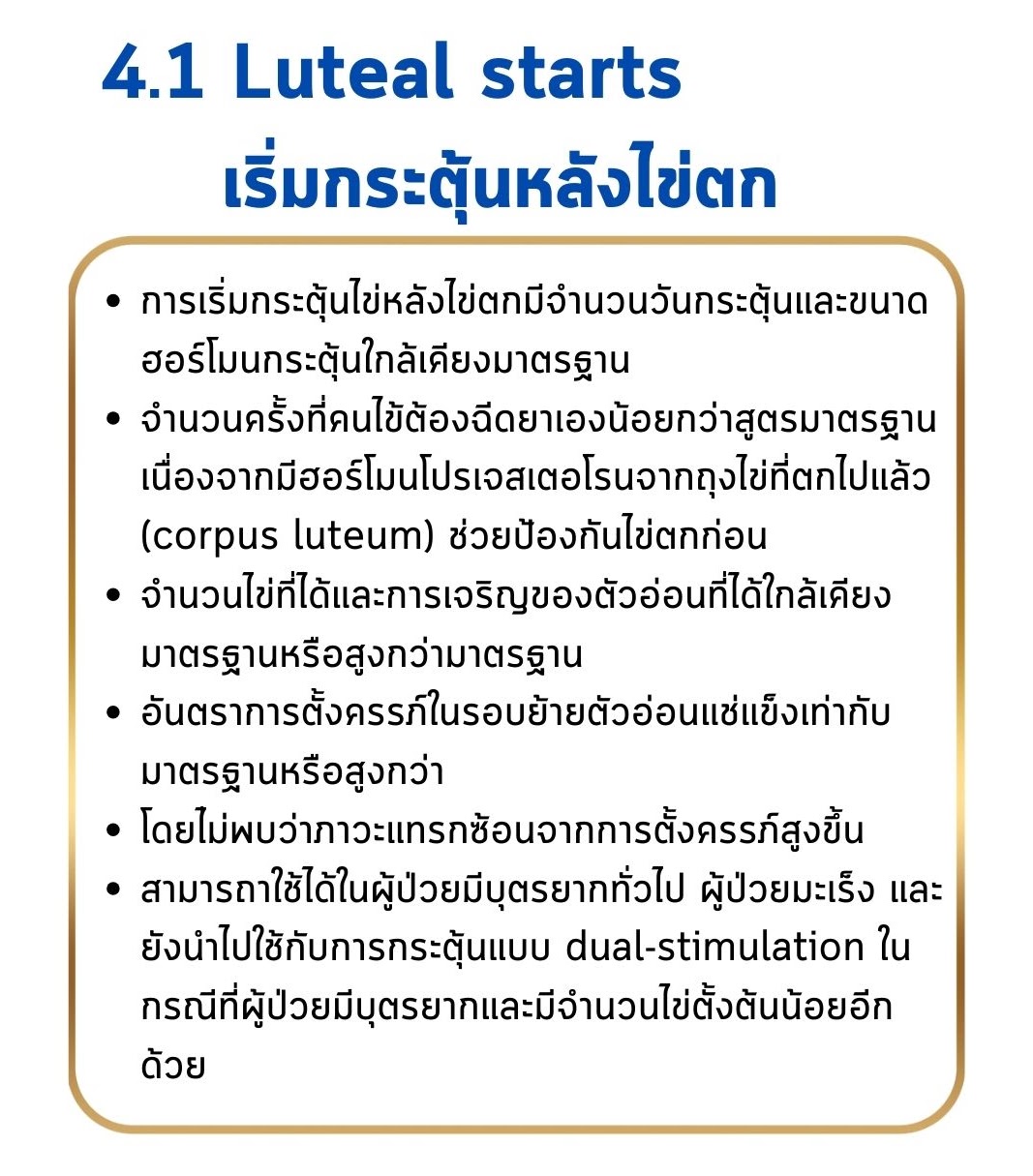
2. Starting Stimulation After Ovulation (Luteal Starts)
Basic knowledge tells us that antral follicles that can be stimulated are present throughout the menstrual cycle. In addition, after ovulation there is a follicle that produces the hormone progesterone. Progesterone suppresses the rise of the LH hormone, so ovulation does not occur. This means medicine to prevent ovulation is not needed if the progesterone level is still high.
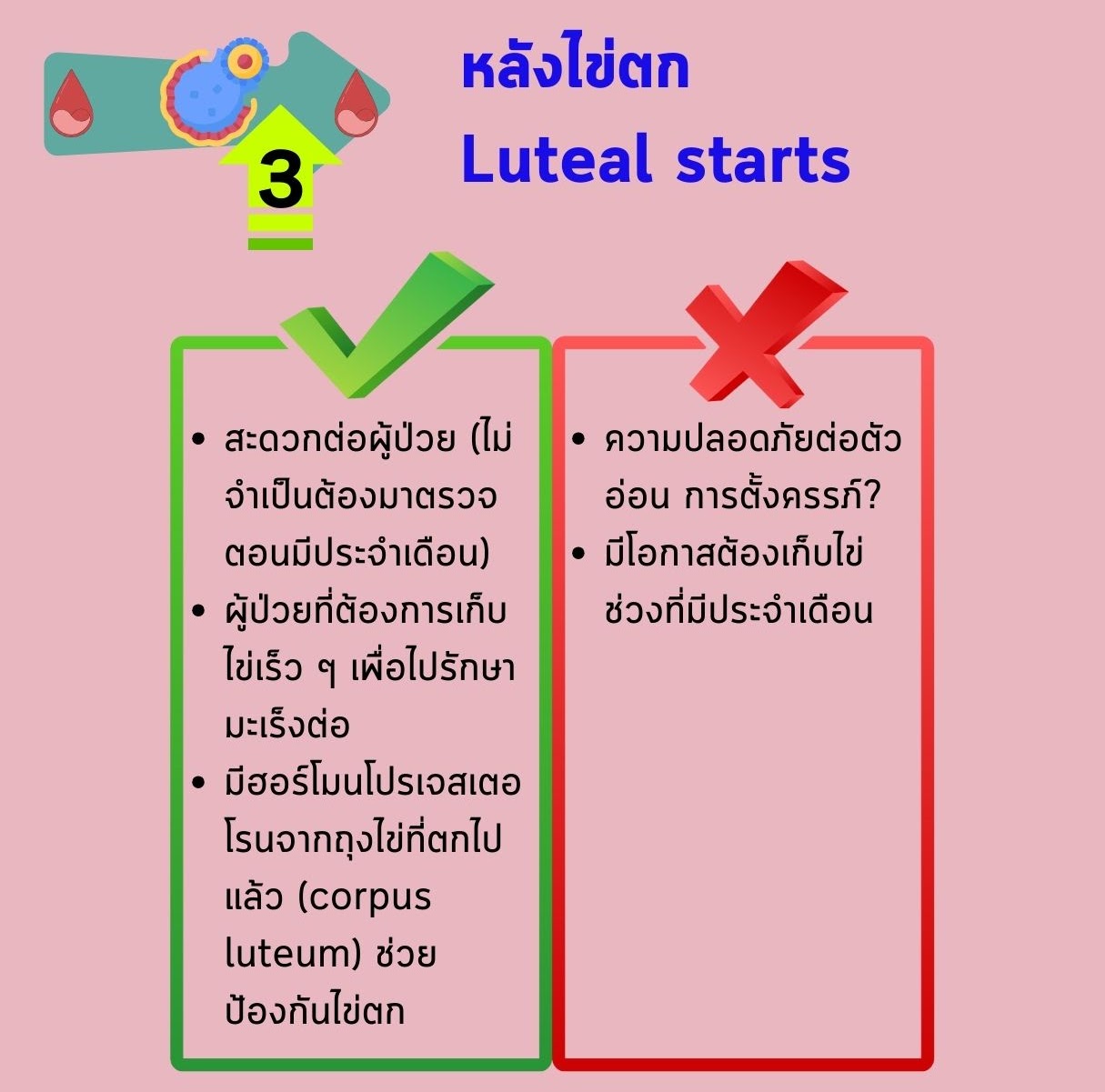
Figure 4. Advantages and disadvantages of starting ovarian stimulation after ovulation (luteal starts).
Starting stimulation after ovulation is more convenient for patients, because they do not need to rush in for a check during their period. Stimulation can start quickly, especially for cancer patients who need to go on to further treatment. However, because data on this method has only become available in the last few years, there is still limited safety data, even though in principle it should not differ from early follicular starts, since all the medicines used are from the same groups. In addition, starting stimulation after ovulation requires freezing all embryos, because the uterine lining is not in sync with the day it is ready to receive an embryo (Figure 4).
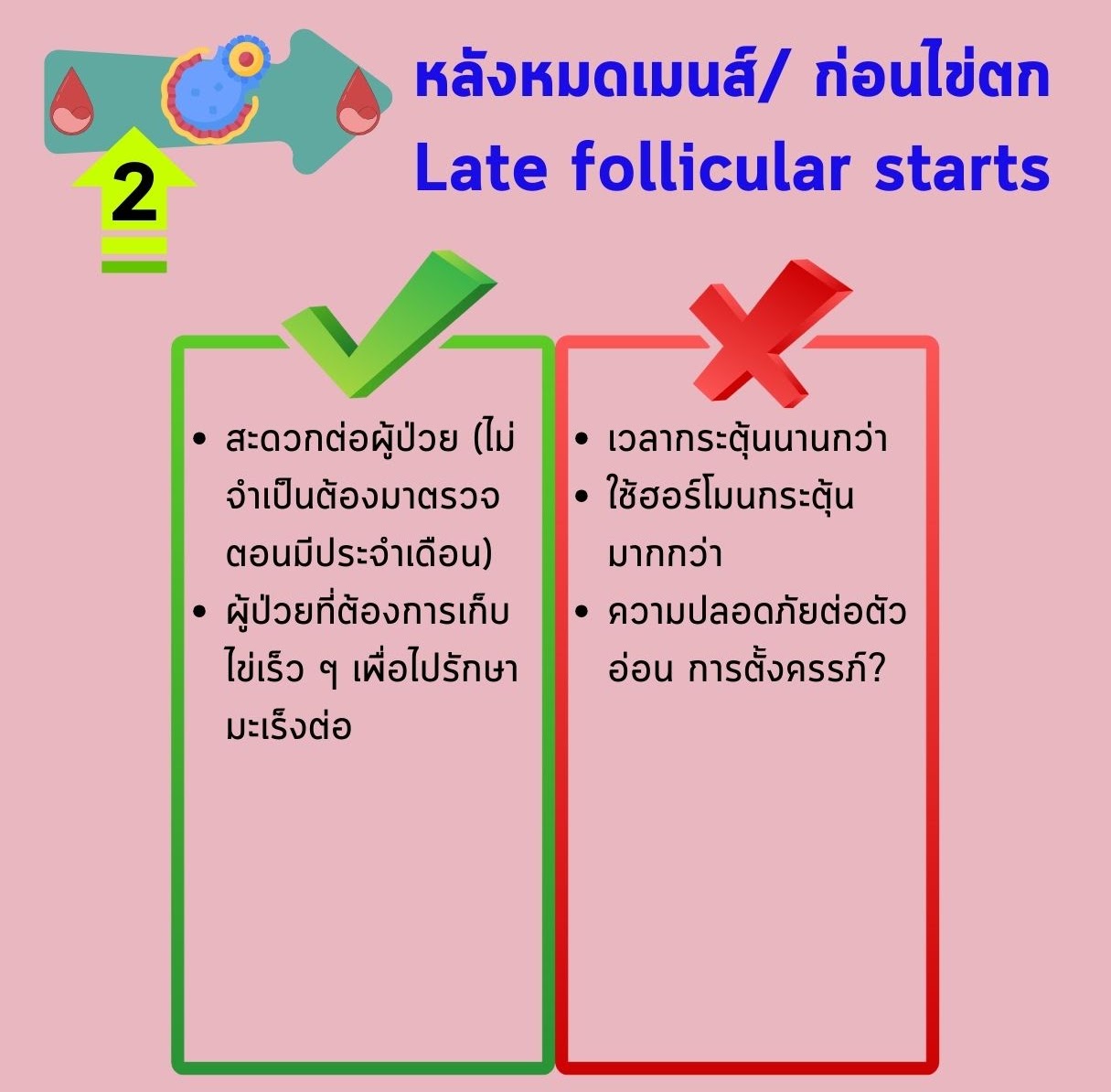
3. Starting Stimulation After the Period Ends but Before Ovulation (Late Follicular Starts)
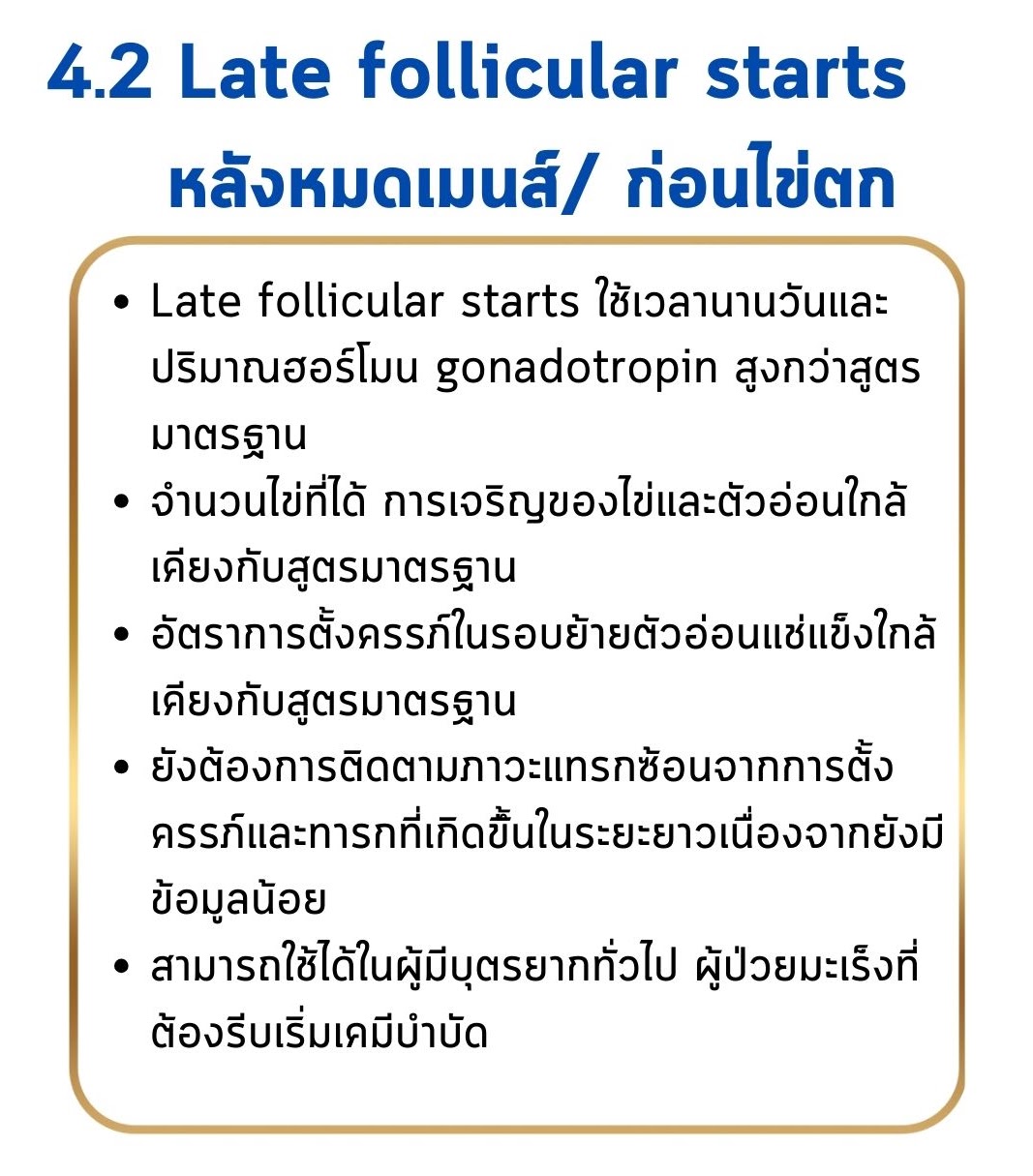
In some cases, such as cancer patients who want to store eggs or embryos before starting chemotherapy, treatment needs to begin quickly and can only be delayed for a short time. So stimulation can be started on any day: stimulation begins as soon as the patient comes in. If this works well, it makes starting stimulation more convenient, both for patients who want to freeze their eggs, sperm or embryos and for infertility patients who need to freeze their embryos anyway, for example those who want PGT-A testing or who have so many eggs that they are at risk of ovarian hyperstimulation syndrome (OHSS).
Figure 5. Advantages and disadvantages of starting ovarian stimulation after the period ends but before ovulation (late follicular starts).
However, stimulation with late follicular starts tends to take longer than the 2 methods described above. This is because the rising estrogen level from the growing follicle reduces the number of FSH receptors, which drive follicle growth, in the other follicles. So the stimulation days are longer, and more gonadotropin hormone has to be used.
Embryo transfer must be done in a frozen cycle only, because the uterine lining will be several days ahead of the embryo. This makes the chance of pregnancy very low if a fresh transfer is done.
In addition, there is not yet enough data on the long-term effects of this type of stimulation start on the embryos, the pregnancy and the babies born. In theory, these effects should not differ from babies born after stimulation started early in the cycle, because the stimulation medicines and the hormones given for luteal phase support are the same types of medicine.
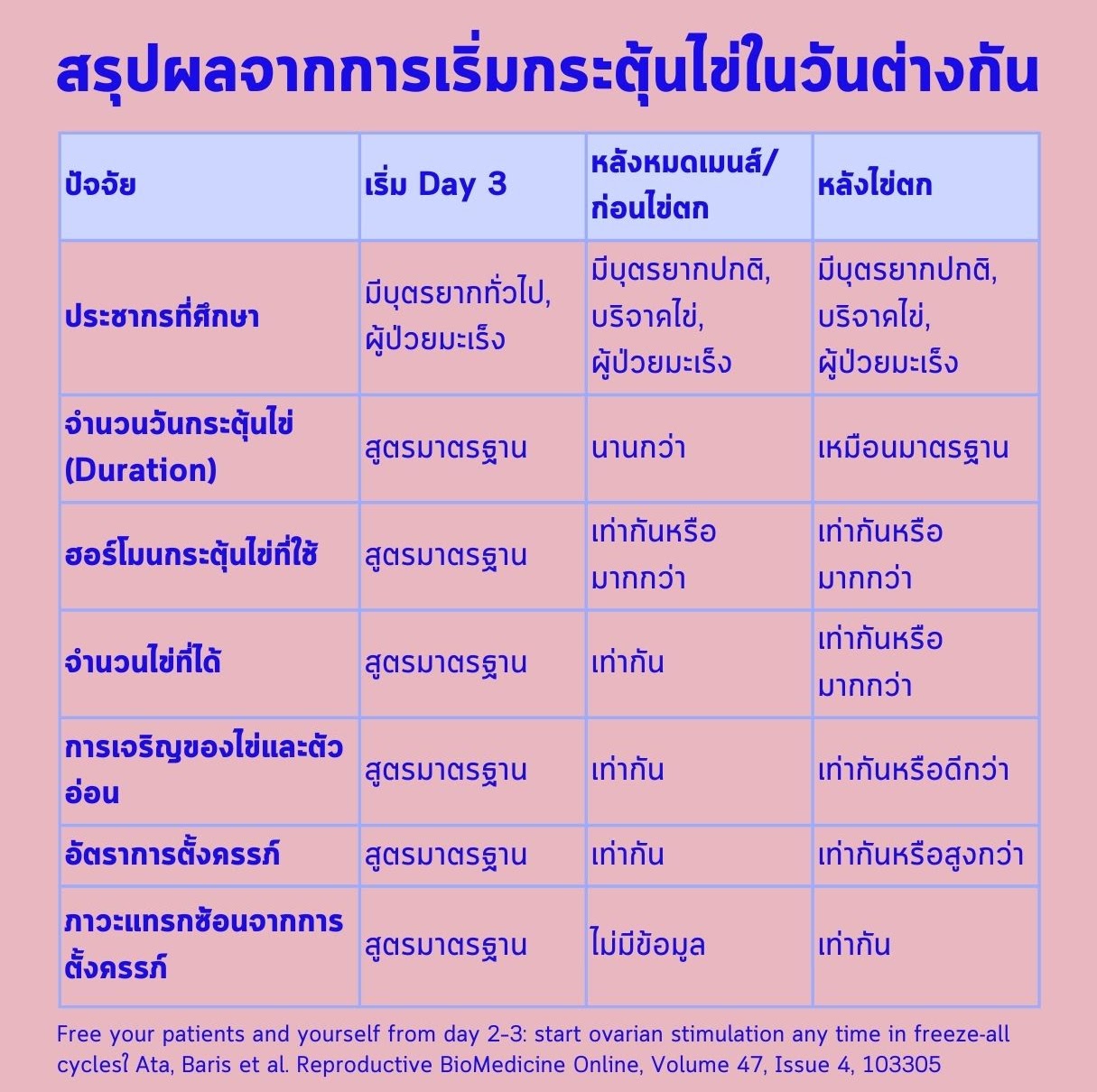
4. Summary of Treatment Outcomes in Research When Stimulation Starts on Different Days of the Cycle
The treatment outcomes compared across different stimulation start days are summarized in Figure 6.
Figure 6. Summary of treatment outcomes in research when ovarian stimulation starts on different days of the menstrual cycle.
Summary
Today, embryo culture laboratories have advanced further, so ovarian stimulation for IVF can be started on any day of the menstrual cycle. This is more convenient for both patients and the medical staff providing care, and gives the greatest benefit to patients.
References
Ata, Baris et al. Free your patients and yourself from day 2–3: start ovarian stimulation any time in freeze-all cycles. Reproductive BioMedicine Online, Volume 47, Issue 4, 2023.
* This article is general health education. Diagnosis and treatment should be guided by your doctor. Results vary with age and individual medical factors.
Dr. Patsama Vichinsartvichai, MD, MClinEmbryol, EFOG-EBCOG, EFRM-ESHRE/EBCOG, FACOG is a board-certified reproductive endocrinology & infertility specialist, former head of the Vajira IVF unit at Navamindradhiraj University, and founder of LIFE by Dr. Pat in Bangkok. His published research focuses on the dysmorphic (T-shaped) uterus and uterine-factor infertility.
 LIFE by Dr. Pat