When only one follicle becomes dominant during IVF stimulation, the options are a delayed trigger, converting to IUI, or cancelling the cycle. How to decide.
✍️ Written by Dr. Patsama Vichinsartvichai, MD, MClinEmbryol, EFOG-EBCOG, EFRM-ESHRE/EBCOG, FACOG — reproductive medicine specialist
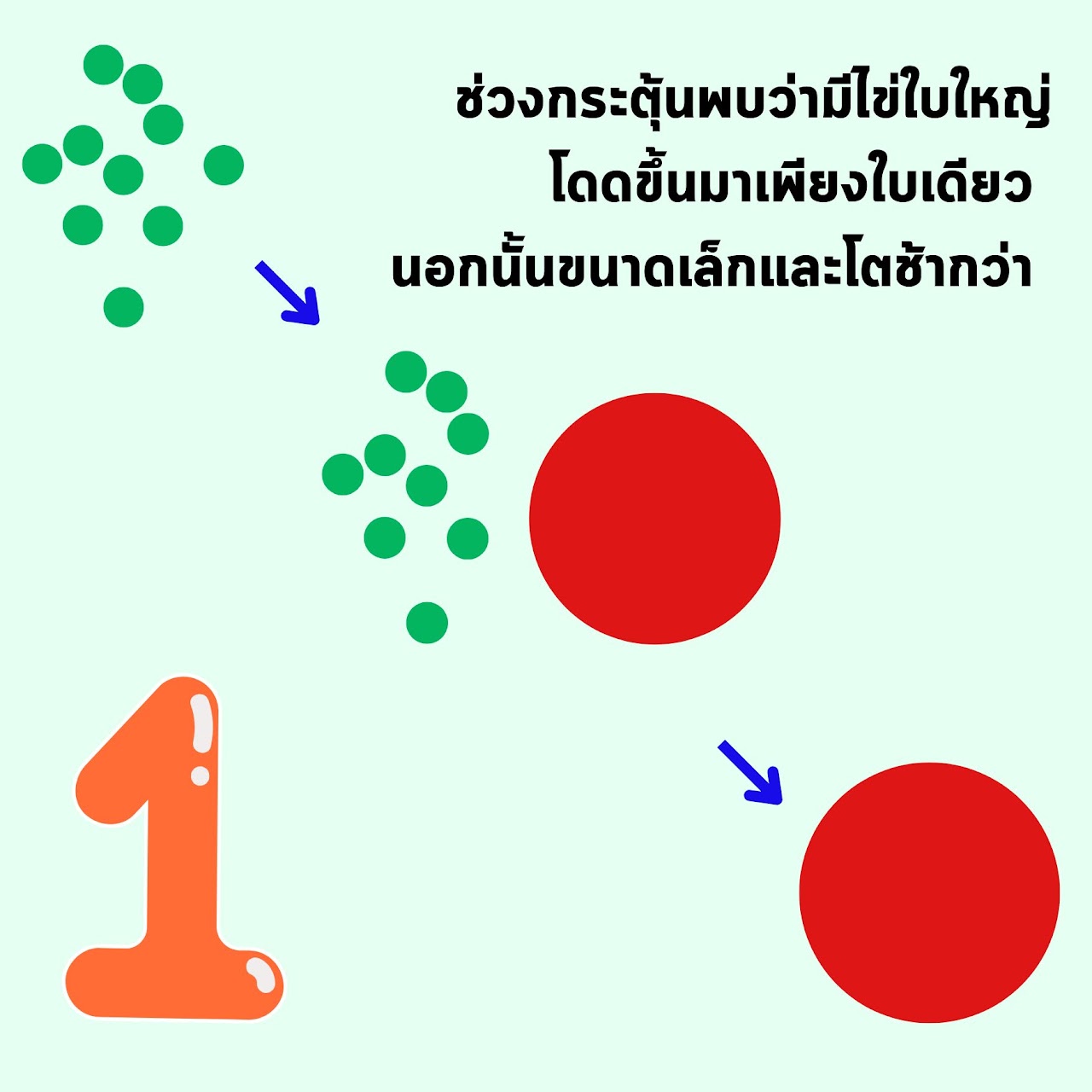
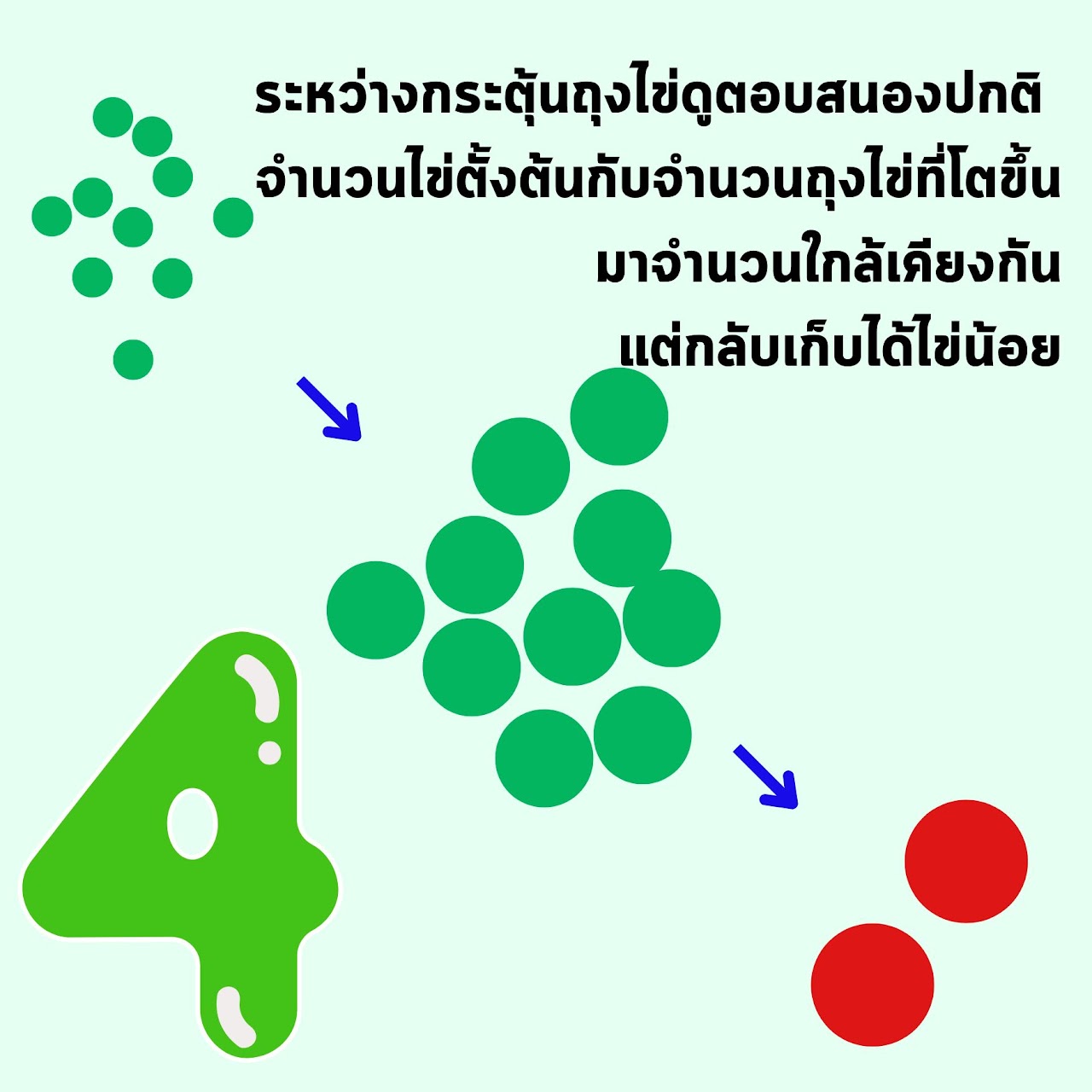
Some patients who have had ovarian stimulation for IVF may have run into this problem: at the start there seemed to be many antral follicles, but after the injections, at the second scan, only one follicle had grown large and all the others were still small. At egg collection, far fewer eggs were retrieved than expected, and most of them turned out to be immature.
Today I'll explain how this happens and how it can be managed.
In a normal natural menstrual cycle
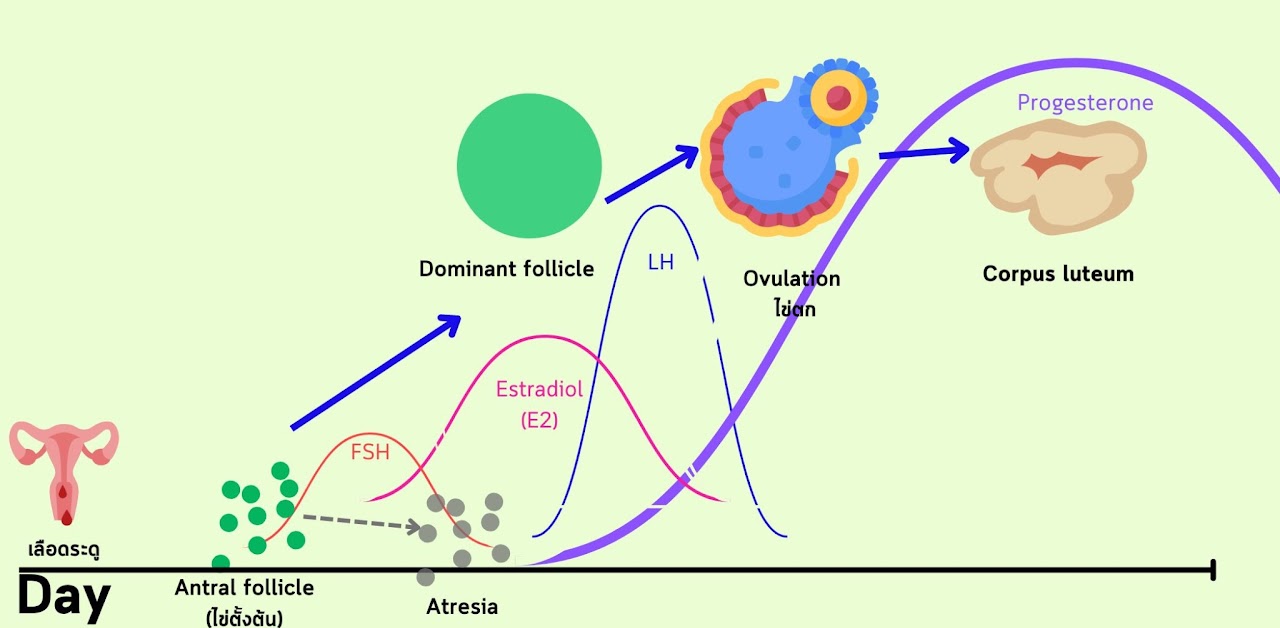
Before we can understand how hormones are used for ovarian stimulation in IVF, we should know what happens in a normal menstrual cycle. During the period, there are follicles 2-9 mm in size that are ready to grow and ovulate in that cycle. There are usually 10-20 of them. These are called antral follicles, the ones we look at on ultrasound when we do an antral follicle count (AFC). At this time, FSH starts to rise and stimulates these follicles to keep growing. Then, 3-5 days after the period starts, the healthiest follicle is selected, or "crowned," to ovulate in that cycle. This is called the dominant follicle. In humans, there is normally only 1 dominant follicle per cycle, and only 1 egg is released each month. As for the other antral follicles, once the dominant follicle has been selected, estradiol and inhibin B from the dominant follicle suppress FSH production. FSH is then not enough to support the growth of the smaller follicles, and the other follicles eventually shrink and die. When the dominant follicle is fully grown and has produced high enough estradiol for long enough, it triggers a rise in LH, called the LH surge, which causes ovulation. The follicle left behind after the egg is released is called the corpus luteum. It goes on to produce progesterone, which changes the uterine lining into the secretory phase to prepare for embryo implantation. If pregnancy occurs, hCG from the pregnancy takes over from LH and keeps the corpus luteum producing progesterone. If there is no pregnancy, the falling LH causes the corpus luteum to shrink, progesterone levels drop, and the uterine lining breaks down and is eventually shed as a period, as shown in Figure 1.
Principles of ovarian stimulation for IVF
In IVF ovarian stimulation, we get many eggs because we stimulate the ovaries at the antral follicle stage described above. It follows these principles:
Ovarian stimulation hormones act mainly as FSH (some brands also have LH activity). The medication must be started before the dominant follicle is selected. We usually start on day 2-3 of the cycle, because once the dominant follicle has been selected, fewer eggs will be retrieved: only the dominant follicle survives, and the others have already started on the path to dying.
The dose of the stimulation hormone must be high enough to support the growth of the other follicles.
The duration of stimulation must be long enough for the eggs to mature in both the nucleus and the cytoplasm.
Preventing ovulation before collection (prevention of premature LH surge) by giving drugs or hormones such as GnRH antagonist or progestins to prevent an early LH surge.
Triggering ovulation (trigger of ovulation) with hCG or GnRH agonists, mimicking the LH surge of a natural cycle, so egg collection can be scheduled 34-36 hours after the trigger.
You can see that IVF ovarian stimulation applies what we know about the normal menstrual cycle to the goals of treatment, using innovations in various medications to get the best possible number and quality of embryos.
How do we know whether the treatment result is good or not?
I think evaluating the treatment result is, to some extent, common sense. Put simply, when we start stimulation, we know how many antral follicles we have to start with (antral follicle count), right? I believe every patient would want the number of eggs retrieved to equal the number of antral follicles. Nobody wants the number of eggs retrieved to be very different from the starting count. Patients would also want all the eggs retrieved to be mature, with as few immature eggs as possible, so that as many as possible can be fertilized into embryos.
We use 3 KPIs to evaluate the quality of our ovarian stimulation. These indicators have 2 types of standards: competency level and benchmark level. Competency level means the minimum we should achieve. Benchmark means that reaching it is excellent. The indicators are:
Cycle cancellation rate before egg collection (%CCR). This indicator reflects the overall quality of ovarian stimulation, but it is often underreported.
Formula: number of stimulation cycles started but cancelled before egg collection / total number of stimulation cycles started
Competency: poor responders ≤ 30%, normal responders ≤ 3%
Benchmark: poor responders ≤ 10%, normal responders ≤ 0.5%
Late Follicle-to-Oocytes index (FOI)
This indicator compares the number of antral follicles at the start of stimulation with the number of eggs retrieved. FOI helps show whether the starting dose of the stimulation hormone was enough, and whether the time from the trigger injection to egg collection was long enough.
Formula: number of eggs retrieved / number of antral follicles (AFC) on the day stimulation starts
Competency: ≥ 50% (in plain words, the number of eggs retrieved is at least half the number of antral follicles)
Benchmark: ≥ 80% (in plain words, the number of eggs retrieved is at least 80% of the number of antral follicles)
Proportion of mature eggs at ICSI (%MII). This shows whether the ovulation trigger was appropriate, both the drug given and the time from trigger to egg collection. Formula: number of mature eggs (MII) at ICSI / number of eggs retrieved. Competency: ≥ 75% (at least 75% of the eggs retrieved are mature). Benchmark: ≥ 90% (at least 90% of the eggs retrieved are mature)
Common problems in ovarian stimulation, their causes and solutions
Few eggs retrieved
This can be divided into 4 sub-cases, each with different causes and solutions. (Don't forget to tap the down arrow below the image to expand the details.)
This case usually happens in patients whose cycles are shorter than 28 days. The cause is that stimulation started too late, so the dominant follicle had already been selected in that cycle and the other follicles had started to die. With stimulation, only one follicle grows. The others may grow slowly afterward, but when they are collected, there is often no egg or the eggs are immature. The solution is to start the stimulation injections earlier, or to stimulate during the luteal phase of the cycle (luteal phase stimulation).
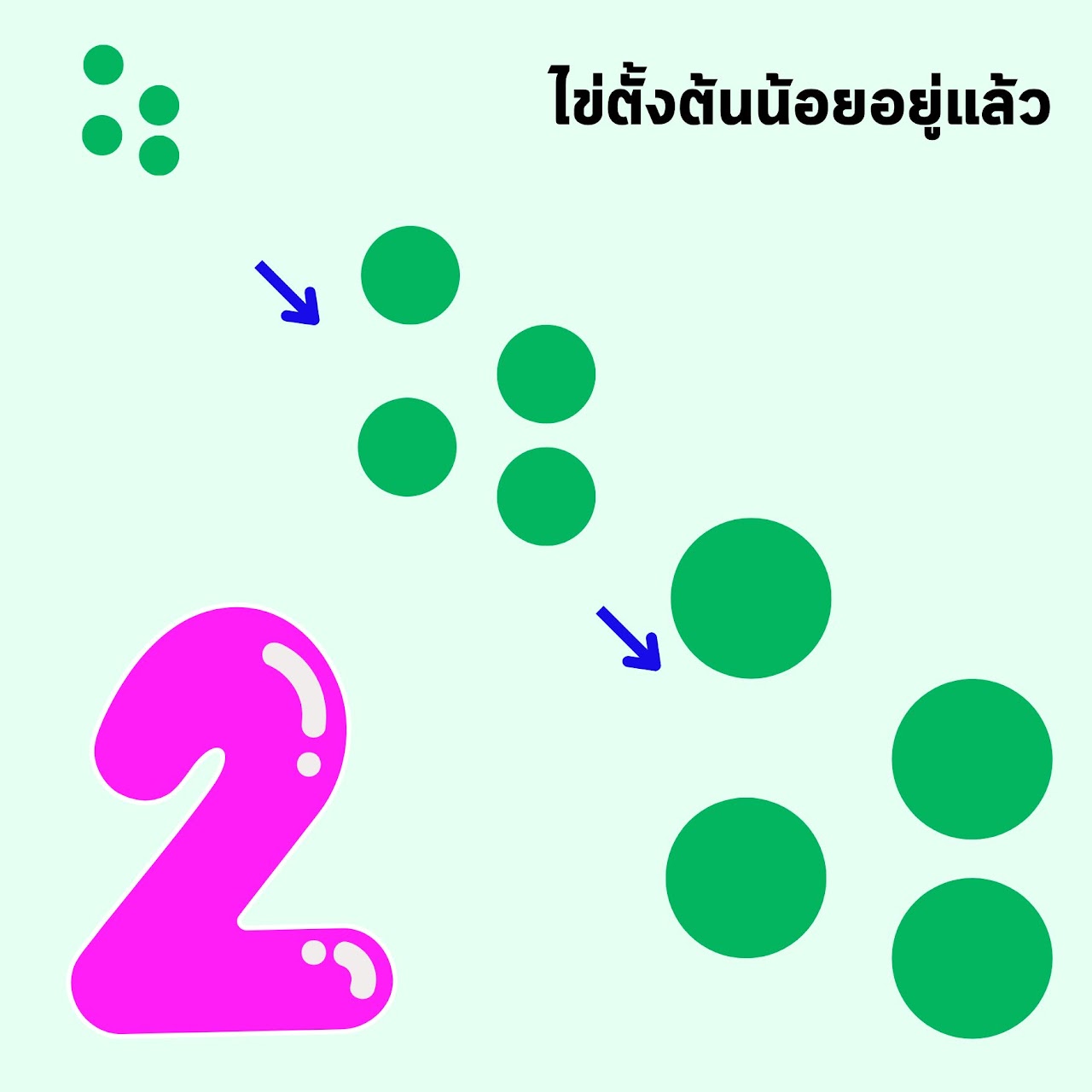
When there are few antral follicles, the number of eggs retrieved will of course be proportionally low. In this case, we may need to accept that each cycle may only yield this many eggs, and several IVF cycles may be needed. In this case, ovarian PRP injection may help increase the number and improve the quality of eggs. (More information)
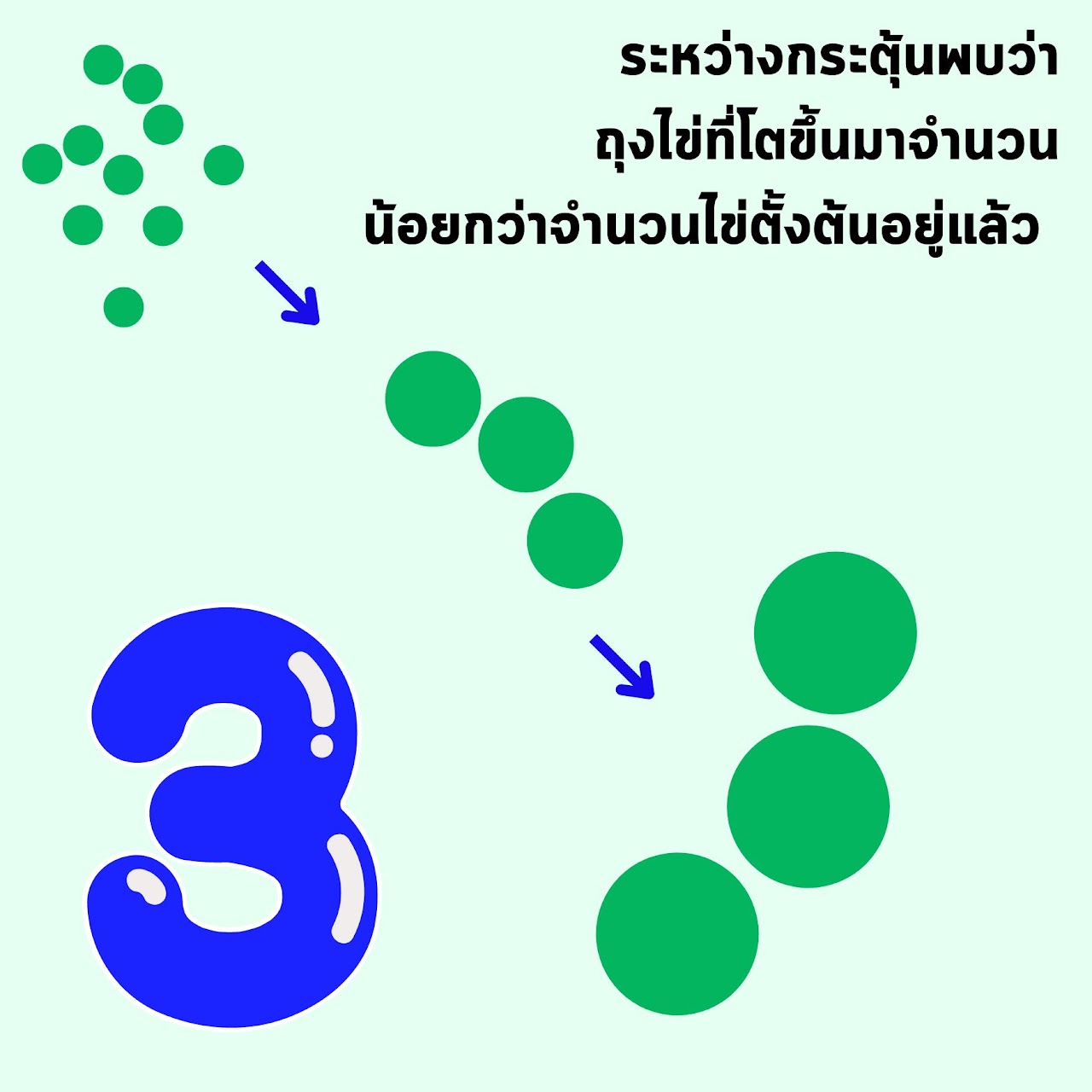
This case shows that the patient responded to the stimulation drugs less than expected. The dose may have been too low, or the patient may need a stimulation drug that also has LH activity.
This case may be caused by a stimulation period that was too short or too long, or by a problem with the ovulation trigger: the patient may have forgotten the injection, injected at the wrong time, the trigger dose may have been too low, there may have been no LH surge (when a GnRH agonist trigger is used alone), or the time from trigger to egg collection may not have been long enough.
2. Low proportion of mature eggs
When the proportion of mature eggs is low, the cause may be a stimulation period that was too short, or a problem with the ovulation trigger: the patient may have forgotten the injection, injected at the wrong time, the trigger dose may have been too low, there may have been no LH surge (when a GnRH agonist trigger is used alone), or the time from trigger to egg collection may not have been long enough. We may consider extending the time from the trigger injection to egg collection beyond 36 hours, up to as long as 40 hours.
References
ESHRE Special Interest Group of Embryology and Alpha Scientists in Reproductive Medicine, The Vienna consensus: report of an expert meeting on the development of ART laboratory performance indicators, Reproductive BioMedicine Online (2017), https://doi.org/10.1016/j.rbmo.2017.06.015.
Vaiarelli, A., Zacà, C., Spadoni, V. et al. Clinical and laboratory key performance indicators in IVF: A consensus between the Italian Society of Fertility and Sterility and Reproductive Medicine (SIFES-MR) and the Italian Society of Embryology, Reproduction and Research (SIERR). J Assist Reprod Genet 40, 1479–1494 (2023). https://doi.org/10.1007/s10815-023-02792-1.
* This article is general health education. Diagnosis and treatment should be guided by your doctor. Results vary with age and individual medical factors.
Dr. Patsama Vichinsartvichai, MD, MClinEmbryol, EFOG-EBCOG, EFRM-ESHRE/EBCOG, FACOG is a board-certified reproductive endocrinology & infertility specialist, former head of the Vajira IVF unit at Navamindradhiraj University, and founder of LIFE by Dr. Pat in Bangkok. His published research focuses on the dysmorphic (T-shaped) uterus and uterine-factor infertility.
 LIFE by Dr. Pat