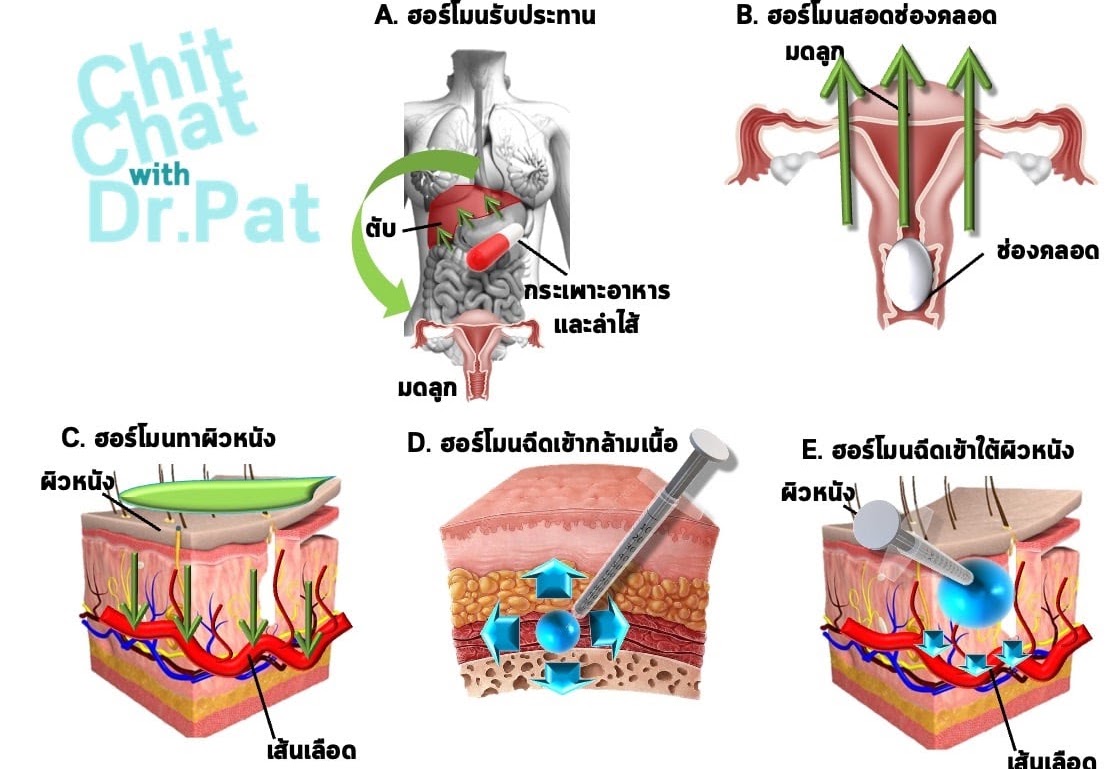
Figure 1 Different routes of hormone administration and how each is absorbed to take effect
I've seen people talking about the different routes for using sex hormones, whether or not it relates to fertility treatment. Many of you are probably wondering: why can't we just take hormones by mouth? Why do we need to apply them to the skin, insert them into the vagina, inject them into a muscle or inject them under the skin? Today I'll explain.
Let's start with #Oral. Hormones we take by mouth usually need a "head" or "tail" added to the hormone molecule so that they can withstand digestive enzymes and are not destroyed first. This added part usually has to be removed before the swallowed hormone can work. Once an oral hormone is absorbed into the bloodstream, it goes straight to the liver, following the path of the blood that supplies the digestive tract. The liver converts most of the hormone into less active forms. It also stimulates the production of proteins that bind the hormone, which makes the share of hormone available to act even smaller. So the #advantage of oral hormones is that they are easy to use: put it in your mouth, swallow, done. The #disadvantage is that absorption may be poor in some people, and the liver gets rid of a large amount of the hormone, so we have to take several times more than the body actually needs. In addition, when the liver converts the hormone into less active forms, these substances may cause unwanted side effects. For example, with gelatin-capsule progesterone (the ones that look like little gecko eggs), when we swallow it, less active hormones are formed that can make us drowsy or nauseated. #Summary: with oral hormones, you have to take a lot, and only a little reaches the target organ. Oral sex hormones come in many types, including estrogens such as Estrofem and Progynova, and progesterones such as Duphaston and Utrogestran. Duphaston (dydrogesterone) is a synthetic hormone. It is absorbed by the intestine and travels to the target organ as dydrogesterone itself. So if we take only duphaston and then have a blood test for progesterone, the level may not go up.
The second route is #Vaginal, which many patients dislike. Inserting hormones into the vagina lets them be absorbed into the bloodstream quickly; most is fully absorbed within 30 minutes. The absorbed hormone passes through the uterus first (which is usually the organ where we want these hormones to act the most). After that, the hormone enters the circulation throughout the body and is later cleared by the liver. This means the uterus and the female reproductive system receive very high hormone levels without needing a large dose (this is called the first-pass uterine effect). The downside of this route is that patients, especially Thai women, find it very awkward and embarrassing, and asking someone else to insert it for them would not feel appropriate. If someone using vaginal hormones has a blood test, the blood level may come out so low that it worries us (but really, that's because a lot of it has already gone into the uterus, so less reaches the bloodstream). In addition, if vaginal hormones are used continuously for many days or weeks, drug residue may come out and look like abnormal vaginal discharge. #Summary: with vaginal hormones, a lot of hormone reaches the target organ from a small dose, but blood levels may come out low. Vaginal hormones are usually progesterones, such as Utrogestran, 8% Crinone, Cyclogest and Endometrin.
Next is the #Transdermal route. The skin is the organ with the largest surface area in the body. When we apply a hormone to the skin, it is absorbed directly into the bloodstream and goes to the target organs first, before reaching the liver and being filtered out. This gives high blood levels, and a lot of the hormone reaches the target organs with little being eliminated. Transdermal hormones come as gels and patches, and almost all of them are estrogens, such as Oestrogel, Estrodose, Divigel and Climara (patch).
Finally, the #Injection route, both intramuscular and subcutaneous. With these, the injected hormone is released directly into the bloodstream, giving high blood levels (but the level at the organ where we want the hormone to act may not be enough). With intramuscular injection, the hormone is released gradually over a longer period than with subcutaneous injection. The trade-off is more pain during the injection, because most intramuscular hormones have to be dissolved in oil, which is thicker and more viscous. Injectable hormones include estrogens, such as injectable progynova (not available in Thailand), and progesterones, such as the intramuscular Proluton we are familiar with. Overseas, there is also subcutaneous progesterone (like the injections we use for ovarian stimulation), which has been found to give higher pregnancy rates than vaginal progesterone. I hope it becomes available to us soon.
As for blood tests to measure hormone levels, I think it is fine to test, especially progesterone, to see whether the level we reach is enough to support a smooth pregnancy, particularly in the first trimester. But we need to understand the hormones being used in order to interpret the results correctly. For example, if we take only Duphaston, the progesterone level will of course not be high, because the Duphaston we take travels to the target organ as dydrogesterone, which standard hormone tests cannot yet measure. Or take some vaginal products, especially vaginal progesterone designed to cling to the vaginal wall and slowly release the hormone through the uterus into the bloodstream, such as 8% Crinone. If we measure blood progesterone, the level will of course be lower than in someone injecting Proluton. But that does not mean the vaginal product is any less effective than the injection.
* This article is general health education. Diagnosis and treatment should be guided by your doctor. Results vary with age and individual medical factors.
Dr. Patsama Vichinsartvichai, MD, MClinEmbryol, EFOG-EBCOG, EFRM-ESHRE/EBCOG, FACOG is a board-certified reproductive endocrinology & infertility specialist, former head of the Vajira IVF unit at Navamindradhiraj University, and founder of LIFE by Dr. Pat in Bangkok. His published research focuses on the dysmorphic (T-shaped) uterus and uterine-factor infertility.
 LIFE by Dr. Pat