Diploma in Gynecologic Endoscopic Surgery, MClinEmbryol,
EFOG-EBCOG., EFRM-ESHRE/EBCOG.
Infertility means that a couple has had regular intercourse (2-3 times per week) for at least 1 year without contraception, but has not had a child. It is an end-point diagnosis that reflects how the reproductive systems of both the woman and the man work together. It is also an indirect marker of the health of both partners. So infertility in each couple can have many causes. A couple may have more than 1 cause, or no cause may be found at all.
Causes of Infertility in Women (Female-Factor Infertility)
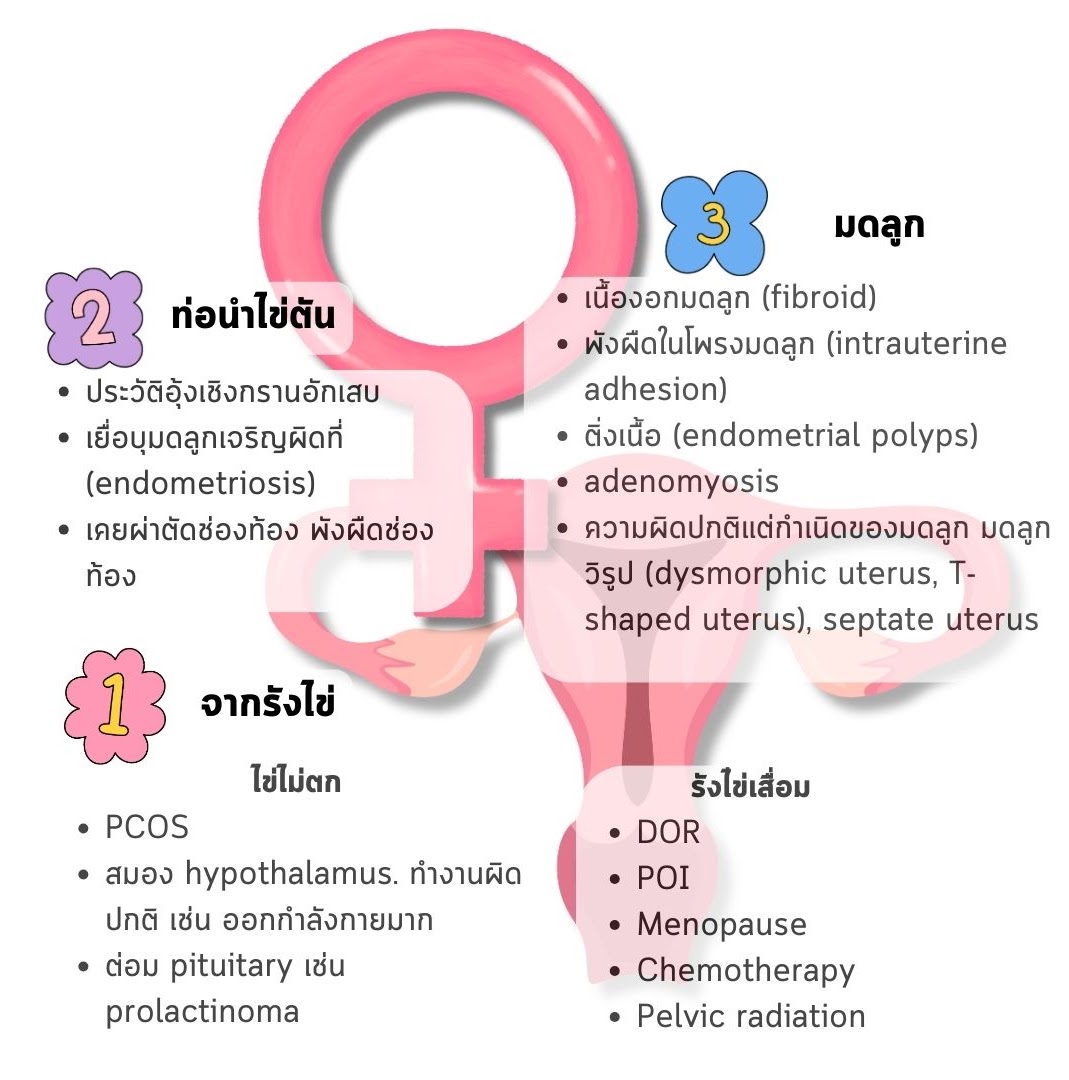
Causes of infertility in women can be grouped by which reproductive organ is affected, as shown in Figure 1. Patients may have different symptoms or signs depending on the condition.
Figure 1 Causes of infertility in women (female infertility)
Ovary
The ovary is very important for fertility. It is the organ where the follicles hold the egg cells until they mature, and it also makes the female sex hormones, especially estrogen and progesterone. Ovarian problems that cause infertility fall into 2 types:
No ovulation (anovulation)
Declining ovarian function, with fewer eggs
Common conditions that stop ovulation include polycystic ovary syndrome (PCOS) and problems with the hypothalamus, the part of the brain that makes GnRH to control the pituitary gland. Examples are very intense exercise and eating disorders such as bulimia or anorexia nervosa. A pituitary tumor that makes prolactin (prolactinoma) can also stop ovulation, as can abnormal thyroid hormone levels.
Declining ovarian function can come from rising age, since the number of follicles naturally falls as you get older (diminished ovarian reserve; DOR). It can also come from premature ovarian insufficiency (POI, reaching menopause before age 40), and finally menopause itself. Many diseases and conditions also destroy the follicles or use them up early, such as chemotherapy, pelvic radiation, autoimmune diseases and Turner syndrome.
Tubal Blockage
The fallopian tubes play a key role. Fertilization happens there, and the tubes nurture the embryo until the blastocyst stage. Many problems can block the tubes, such as pelvic inflammatory disease (PID), endometriosis, gonorrhea or chlamydia infection, and adhesions from pelvic or abdominal surgery.
Uterus
The uterus supports the growth and development of the embryo and the baby from the blastocyst stage until full term. The uterus must be able to receive the embryo and to stretch as the baby grows until full term. Problems with the uterus can lead to failed implantation, miscarriage, or even preterm birth.
Several congenital malformations of the uterus are linked to infertility, such as dysmorphic uterus and septate uterus. These anomalies are associated with infertility, miscarriage and preterm birth.
Fibroids (myoma uteri) that press into the uterine cavity or are 4 cm or larger, or an enlarged uterus caused by endometrial tissue growing in the uterine wall (adenomyosis), can also cause infertility.
Conditions inside the uterine cavity, including endometrial polyps and intrauterine adhesions (intrauterine synechiae; Asherman syndrome), are also causes of infertility.
Interaction Between Mother and Embryo
Besides a normal reproductive structure, another important factor we must not forget is the interaction between mother and embryo. This includes the uterine lining's readiness to receive the embryo (endometrial receptivity), and the mother's immune system, which has to "turn a blind eye" so that an embryo that is only half like her can stay with her for up to 10 months. Problems with this interaction include:
The day the uterine lining is ready to receive an embryo does not match the embryo's timing, known as a shift of the window of receptivity. This is found when a normal embryo is transferred but does not implant, and it can be detected with endometrial receptivity analysis (ERA)
The mother's immune system makes antibodies against the embryo, as in antiphospholipid antibody syndrome (APAS or APS), which causes blood clots that block the vessels supplying the placenta
Abnormal blood clotting, such as Protein C/Protein S deficiency
Causes of Infertility in Men (Male-Factor Infertility)
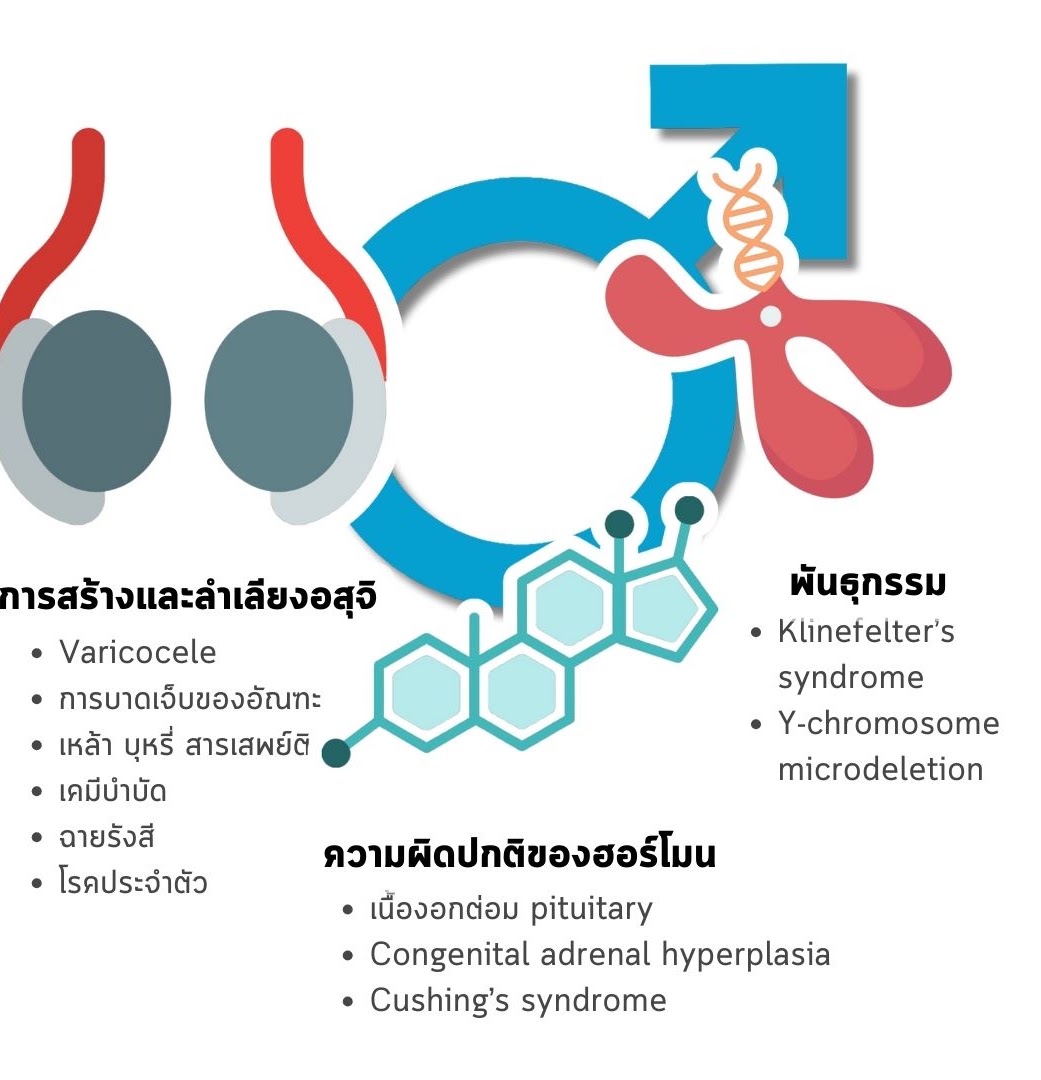
Male infertility has many causes, as shown in Figure 2. Most men with a fertility problem have no symptoms or abnormal signs. The problem is usually found on semen analysis.
Figure 2 Causes of infertility in men (male-factor infertility)
The causes of male infertility can be grouped into 3 categories:
Problems with sperm production and transport
Hormonal problems
Genetic problems
Problems with Sperm Production and Transport
Sperm are made in the seminiferous tubules of the testis. They travel through ducts in the testis to be stored in the epididymis, where they gain the ability to move. They then pass through the vas deferens to the seminal vesicles, with secretions from the prostate gland, Cowper gland and bulbourethral gland. So abnormal cell division during sperm production, or a blockage in the sperm pathway, can cause male-factor infertility.
Conditions that disrupt sperm production and transport include varicocele (varicose veins around the testis), a past injury to the testis, mumps infection of the testis (mumps orchitis), drinking alcohol, smoking or using recreational drugs, past chemotherapy, radiation to the testis area, and some serious chronic illnesses.
Hormonal Problems
The main hormones that control sperm production and transport are testosterone, FSH and LH. Common hormonal problems include pituitary tumors, congenital adrenal hyperplasia and Cushing's syndrome.
Genetic Disorders
Many genetic disorders disrupt sperm production and ejaculation. These include abnormal chromosome numbers, such as Klinefelter's syndrome (XXY), and gene abnormalities, such as Y-chromosome microdeletion.
Summary
Testing to find the cause of infertility is necessary because the cause can differ from couple to couple, and this affects treatment planning. The aim is to help each patient succeed and have the baby they hope for soon.
* This article is general health education. Diagnosis and treatment should be guided by your doctor. Results vary with age and individual medical factors.
Dr. Patsama Vichinsartvichai, MD, MClinEmbryol, EFOG-EBCOG, EFRM-ESHRE/EBCOG, FACOG is a board-certified reproductive endocrinology & infertility specialist, former head of the Vajira IVF unit at Navamindradhiraj University, and founder of LIFE by Dr. Pat in Bangkok. His published research focuses on the dysmorphic (T-shaped) uterus and uterine-factor infertility.
 LIFE by Dr. Pat