Diploma in Gynecologic Endoscopic Surgery, MClinEmbryol,
EFOG-EBCOG., EFRM-ESHRE/EBCOG.
30 Sep 2023
A dysmorphic uterus (dysmorphic T-shaped uterus) is a congenital uterine anomaly that is common in people with infertility. I once did research surveying infertility patients with 3D ultrasound and found that 27 percent of people with infertility had a dysmorphic uterus (compared with only 0.8 percent of women who already have children). I've seen some sources say that a dysmorphic uterus has nothing to do with infertility, and that doesn't sit well with me. Let's look at the data.
How the uterus develops, and the types of congenital uterine anomalies
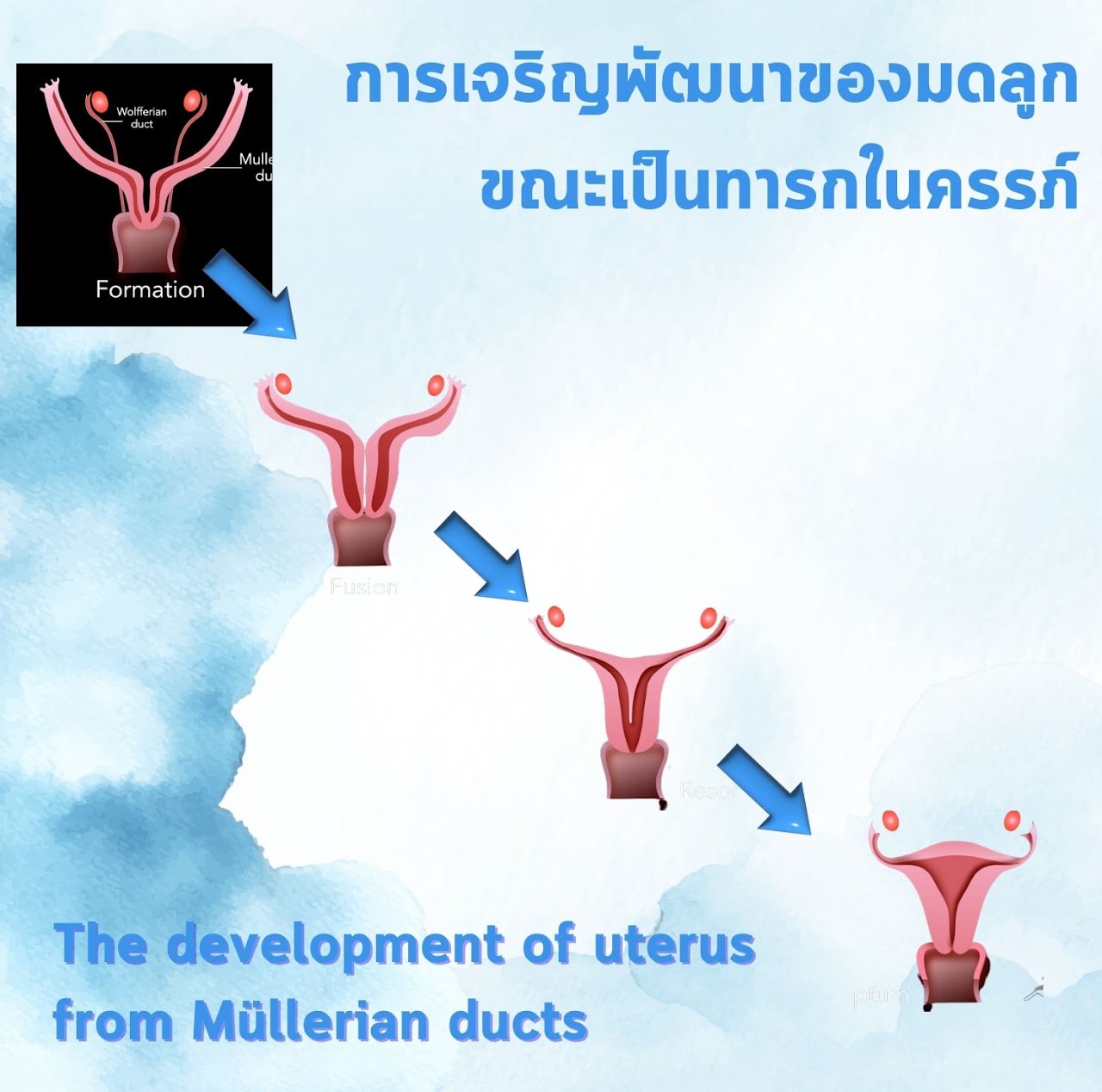
The uterus develops from two ducts called the Müllerian ducts, or paramesonephric ducts. They join at the lower end, and the wall between the two ducts disappears, so the human uterus ends up as a single chamber, as shown in Figure 1.
Figure 1 How the human uterus develops before birth
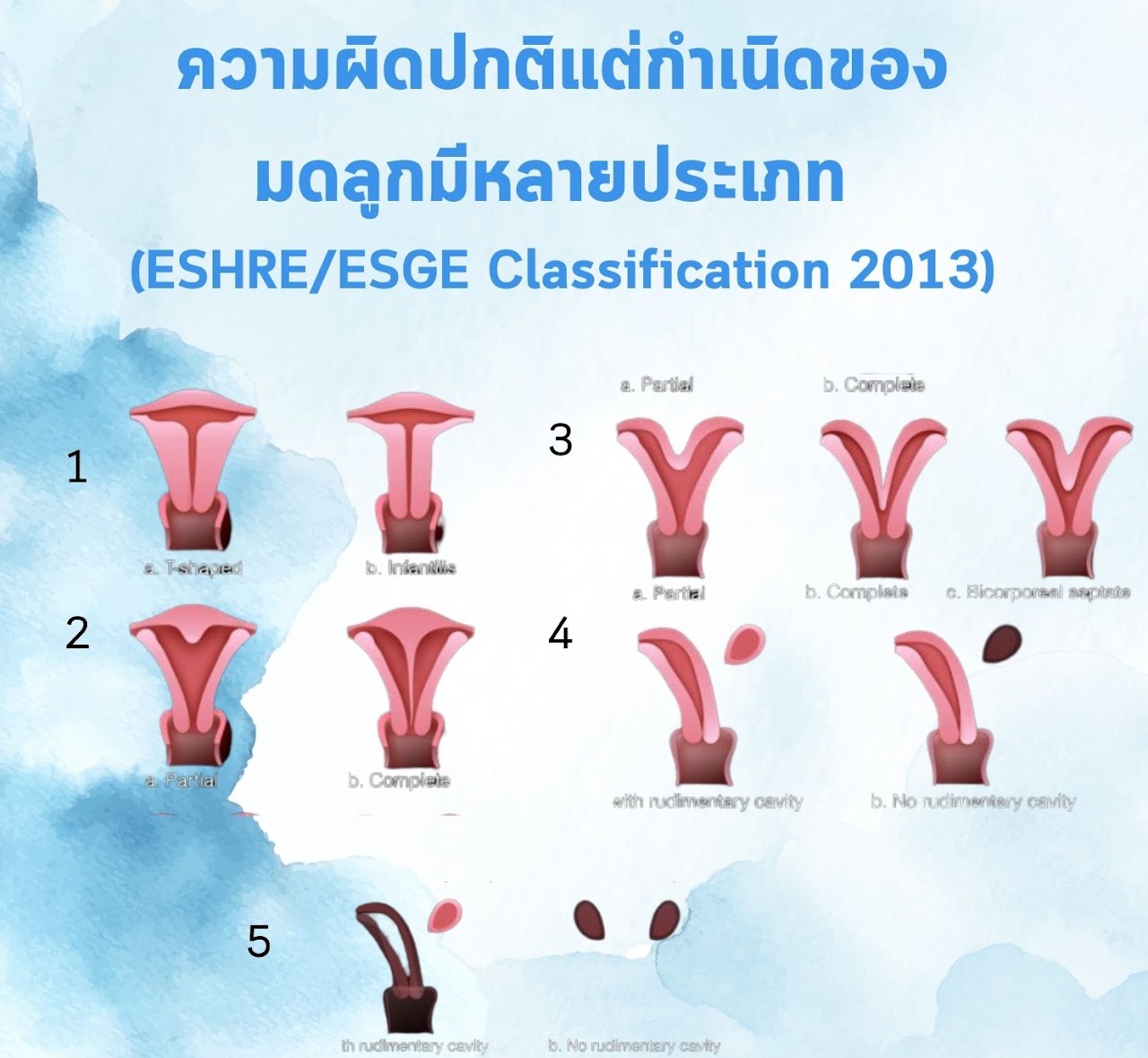
So if something goes wrong in this process, the result is a congenital uterine anomaly. This is why there are many types of anomalies, as shown in Figure 2.
Figure 2 Types of congenital uterine anomalies according to the ESHRE/ESGE 2013 classification
Congenital anomalies caused by the Müllerian ducts fusing abnormally, or not fusing at all, give the patient two uterine bodies, either a bicornuate uterus or uterine didelphys (two uteri and two cervixes).
Anomalies caused by the wall between the two ducts not disappearing, or not disappearing completely, result in a wall dividing the uterine cavity (septate uterus).
In some people, the Müllerian ducts don't form completely. If only one side forms, the result is a unicornuate uterus. If neither duct forms, the result is an aplastic uterus, or no uterus.
A dysmorphic uterus, on the other hand, is caused by thickening of the uterine muscle. It is not caused by an error in these developmental steps.
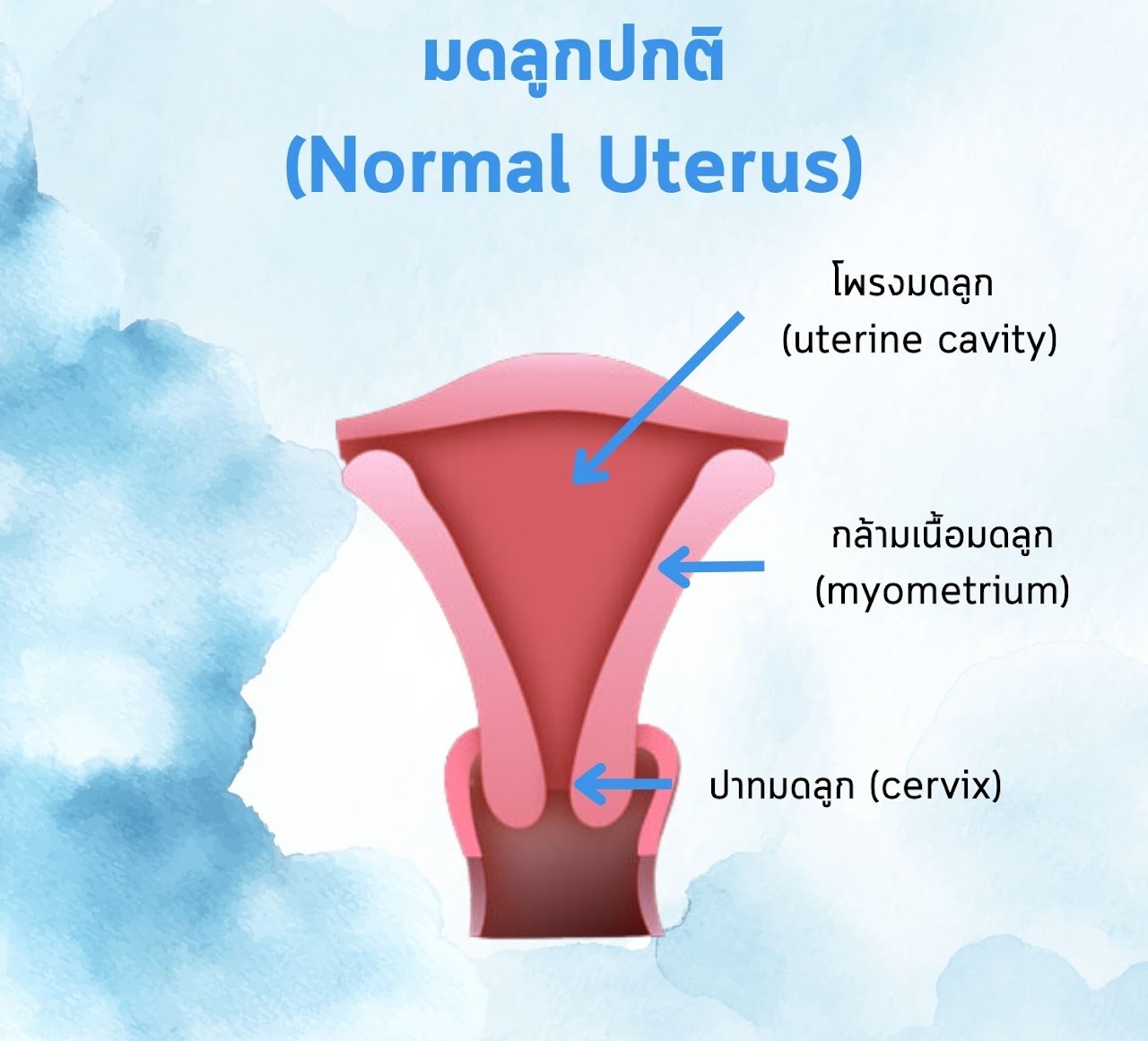
A normal uterus has a cervix, a triangular uterine cavity, and uterine muscle, as shown in Figure 3.
Figure 3 A normal uterus
A dysmorphic uterus is not two uterine bodies
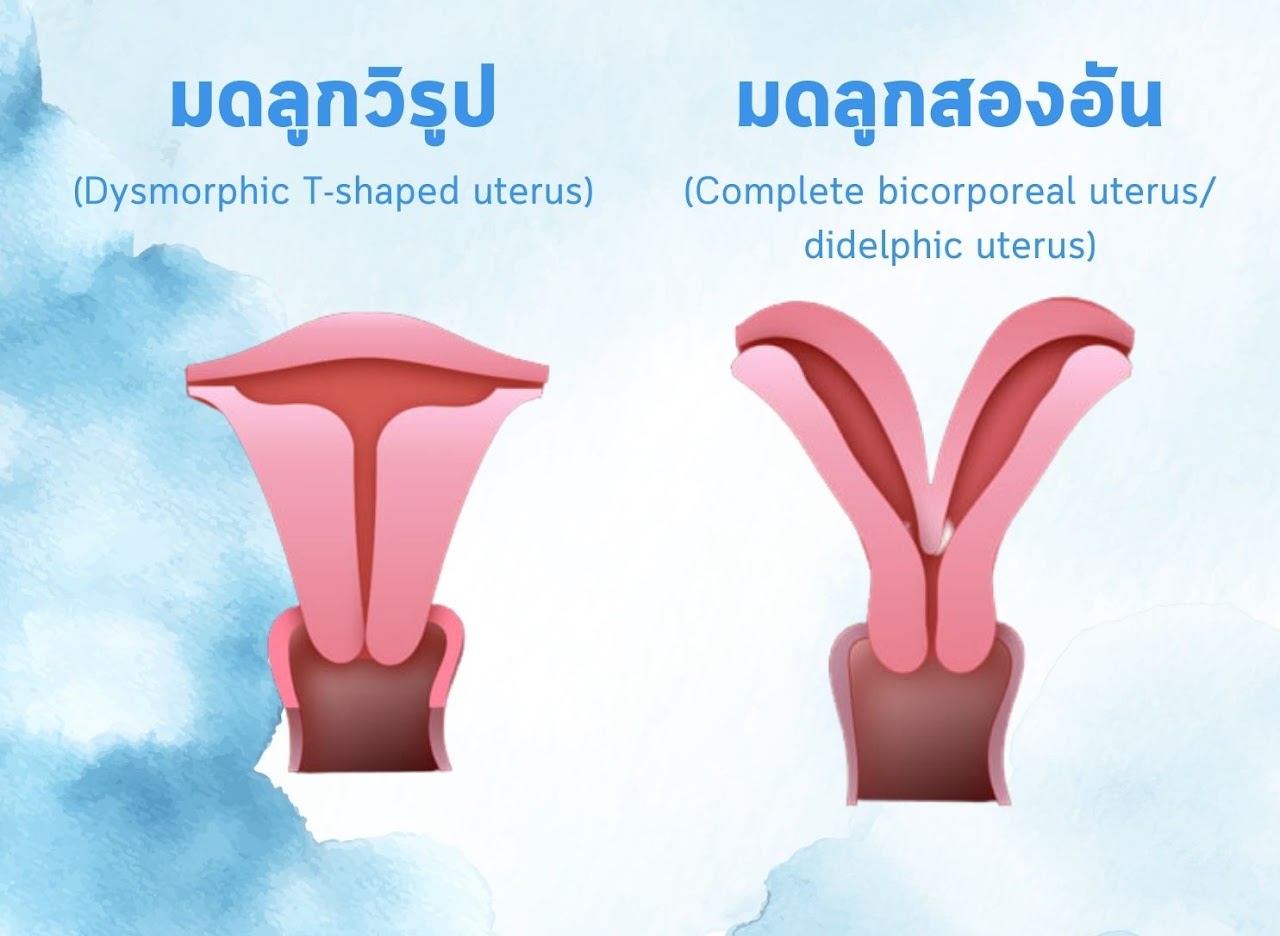
From the classification above, you can see that a dysmorphic uterus is a single uterus. It is not a uterus with two bodies; they are different conditions (Figure 4). So their effects on pregnancy are also very different.
Figure 4 The difference between a dysmorphic uterus and a uterus with two bodies
Dysmorphic uterus and fertility
Figure 5 The effects of a dysmorphic uterus on fertility
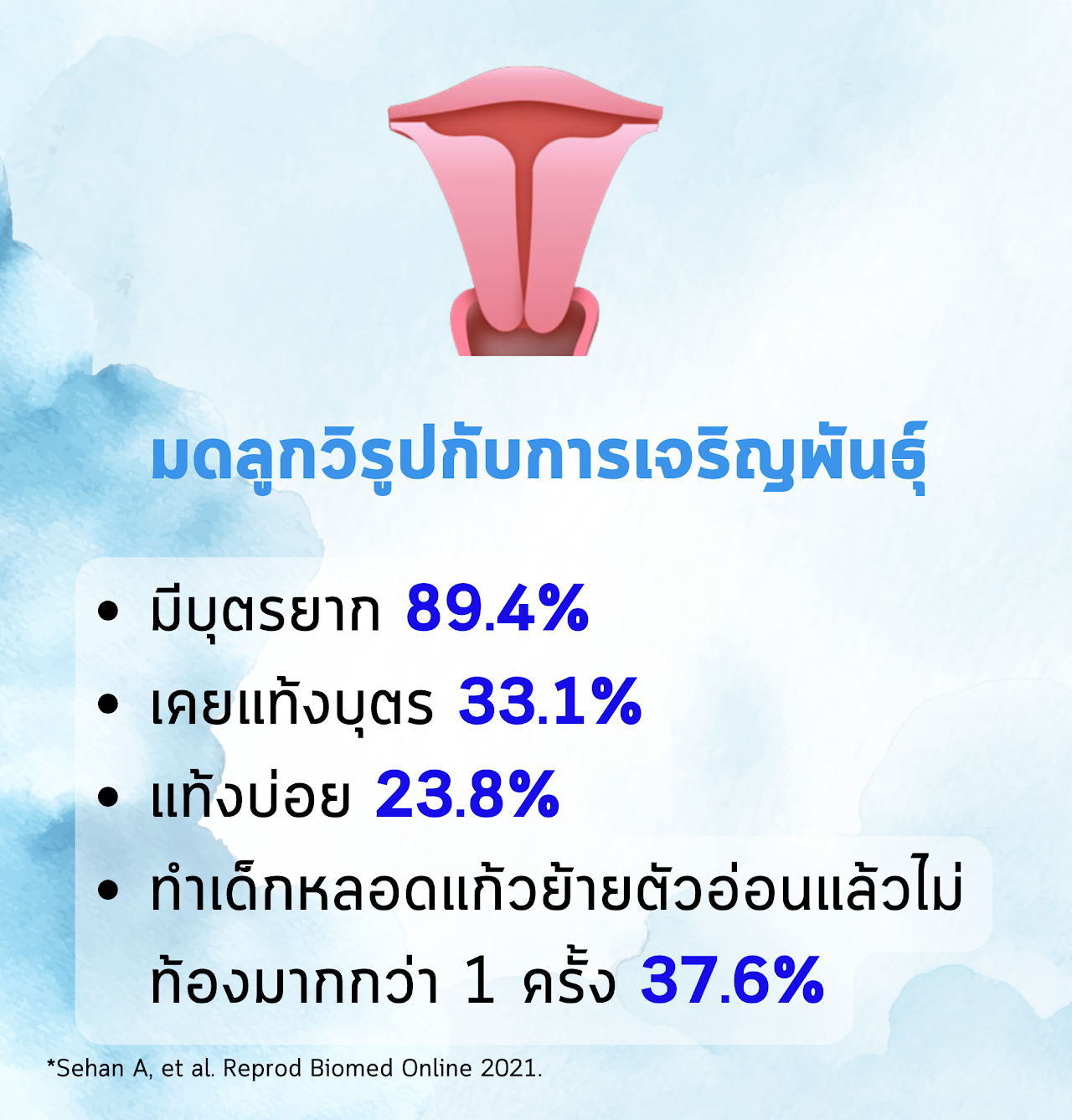
A dysmorphic uterus is considered the most severe congenital uterine anomaly, and it is fairly common in people with infertility. Surveys found a prevalence of dysmorphic uterus of 0.8% in women in general and as high as 27% in women with infertility.
A pooled analysis of studies covering roughly eight hundred people with a dysmorphic uterus found 89.4% with infertility, 33.1% with a previous miscarriage, 33% with recurrent miscarriage, 23.8% with repeated failed IVF embryo transfers, 37.6%. In other words, the outlook is not very good without corrective surgery.
A dysmorphic uterus is not associated with congenital anomalies in other body systems.
Two uterine bodies and fertility
Figure 6 The effects of a uterus with two bodies on fertility
A uterus with two bodies is uncommon (about 0.4% in the general population and 1.1% in people with infertility).
Fertility with a uterus with two bodies is fairly close to that of people with a normal uterus. It may only slightly increase the risk of preterm birth. Most patients can get pregnant and give birth just like people with a normal uterus.
However, people with a uterus with two bodies often have congenital anomalies in other body systems as well, such as one kidney that did not develop (aplastic kidney) or spinal anomalies. These need further investigation.
References
Seyhan A, Ertas S, Urman B. Prevalence of t-shaped uterus among fertile women based on eshre/esge and congenital uterine malformation by experts (cume) criteria. Reprod Biomed Online. Sep 2021;43(3):515-522. doi:10.1016/j.rbmo.2021.06.003
Coelho Neto MA, Ludwin A, Petraglia F, Martins WP. Definition, prevalence, clinical relevance and treatment of t-shaped uterus: Systematic review. https://doi.org/10.1002/uog.23108. Ultrasound in Obstetrics & Gynecology. 2021/03/01 2021;57(3):366-377. doi:https://doi.org/10.1002/uog.23108
Patsama Vichinsartvichai. Chapter 11: Dysmorphic uterus. In: Patsama Vichinsartvichai. Congenital malformation of uterus [in Thai]. B.E. 2565 (2022).
Patsama Vichinsartvichai. Chapter 13: Bicorporeal uterus. In: Patsama Vichinsartvichai. Congenital malformation of uterus [in Thai]. B.E. 2565 (2022).
Ludwin A, Coelho Neto MA, Ludwin I, et al. Congenital uterine malformation by experts (cume): T-shaped uterus. Ultrasound Obstet Gynecol. Aug 20 2019; doi:10.1002/uog.20845
Grimbizis GF, Gordts S, Di Spiezio Sardo A. The eshre-esge consensus on the classification of female genital tract congenital anomalies. Hum Reprod. 2013;28doi:10.1093/humrep/det098
* This article is general health education. Diagnosis and treatment should be guided by your doctor. Results vary with age and individual medical factors.
Dr. Patsama Vichinsartvichai, MD, MClinEmbryol, EFOG-EBCOG, EFRM-ESHRE/EBCOG, FACOG is a board-certified reproductive endocrinology & infertility specialist, former head of the Vajira IVF unit at Navamindradhiraj University, and founder of LIFE by Dr. Pat in Bangkok. His published research focuses on the dysmorphic (T-shaped) uterus and uterine-factor infertility.
 LIFE by Dr. Pat