Diploma in Gynecologic Endoscopic Surgery, MClinEmbryol,
EFOG-EBCOG., EFRM-ESHRE/EBCOG.
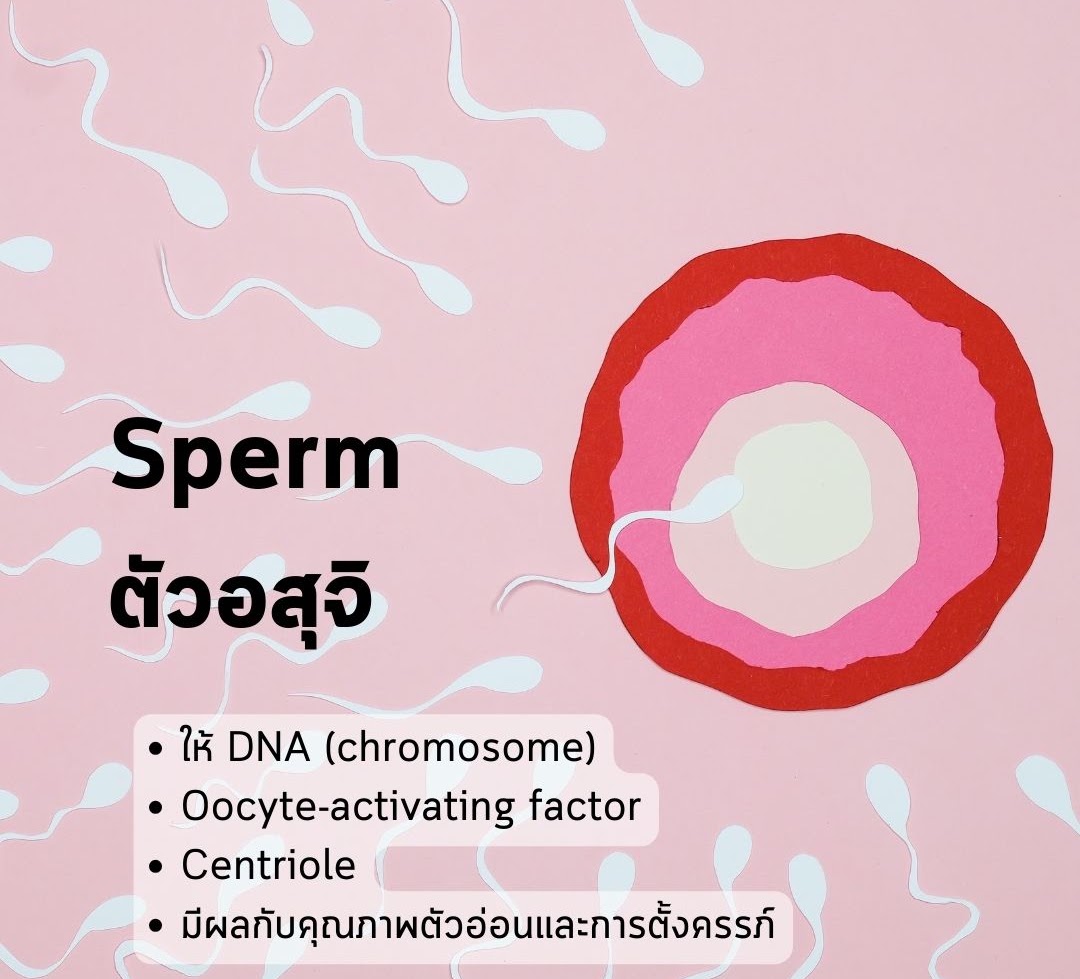
Sperm quality matters a great deal for embryo quality and the chance of pregnancy. Sperm pass on chromosomes and DNA, and they also play a part in triggering the fertilization mechanism in the egg and in providing the centriole, as shown in Figure 1.
Figure 1 The role of sperm in the embryo and pregnancy
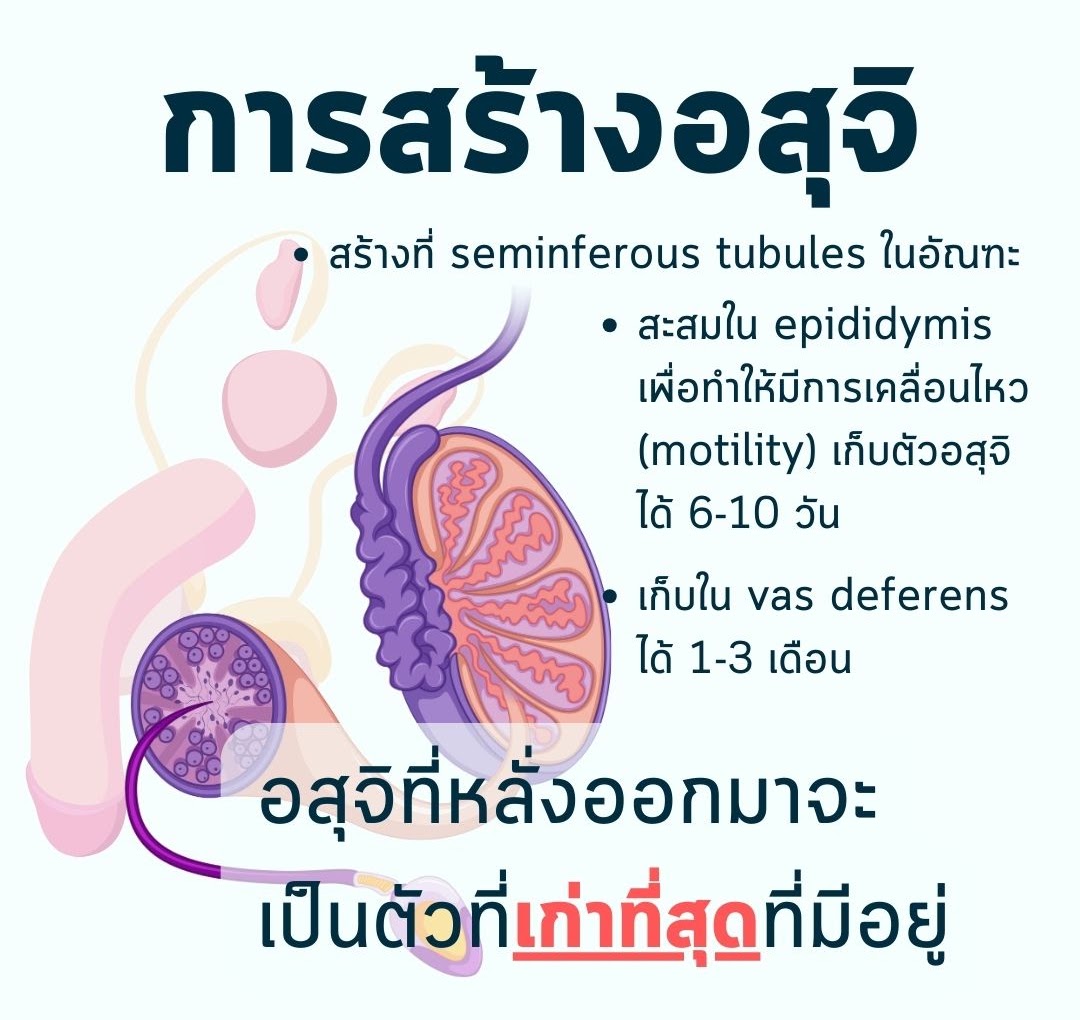
Sperm are produced in the seminiferous tubules of the testes. They then move to the epididymis to mature and gain the ability to move (motility). After that, they travel out through the vas deferens, ready for ejaculation. Sperm mature in the epididymis for 6-10 days and can be stored in the vas deferens for up to 3 months. The longer they are stored, the more of the moving sperm die and eventually stop moving. Dead sperm are also a source of free radicals, which damage the sperm that are still moving, for example by causing DNA breaks (DNA fragmentation). Sperm production and transport happen automatically, and the sperm that are ejaculated are the oldest stored sperm (Figure 2).
Figure 2 Sperm production and transport from the testes to ejaculation. Each ejaculation releases the oldest stored sperm.
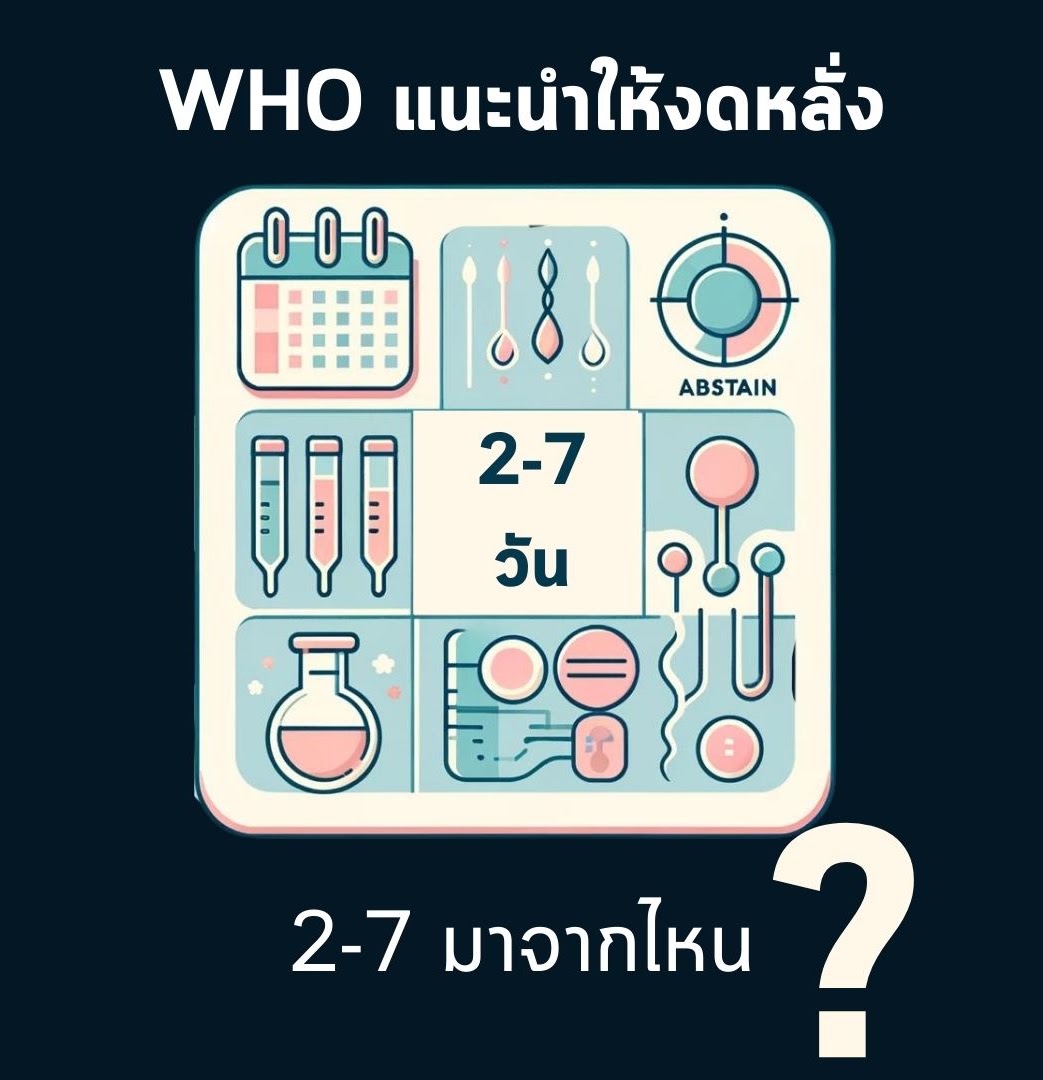
Figure 3 The World Health Organization (WHO) recommendation to abstain from ejaculation for 2-7 days before testing
After maturing in the epididymis, sperm move well. But when they are stored for a long time, they die and stop moving. Today, the World Health Organization (WHO) recommends abstaining from ejaculation for 2-7 days before giving a sample for testing or treatment (Figure 3). The 2-7 day figure is expert opinion. There is no scientific medical research evidence explaining why abstinence should be 2-7 days, and it conflicts with the natural process of sperm production and transport that I described above.
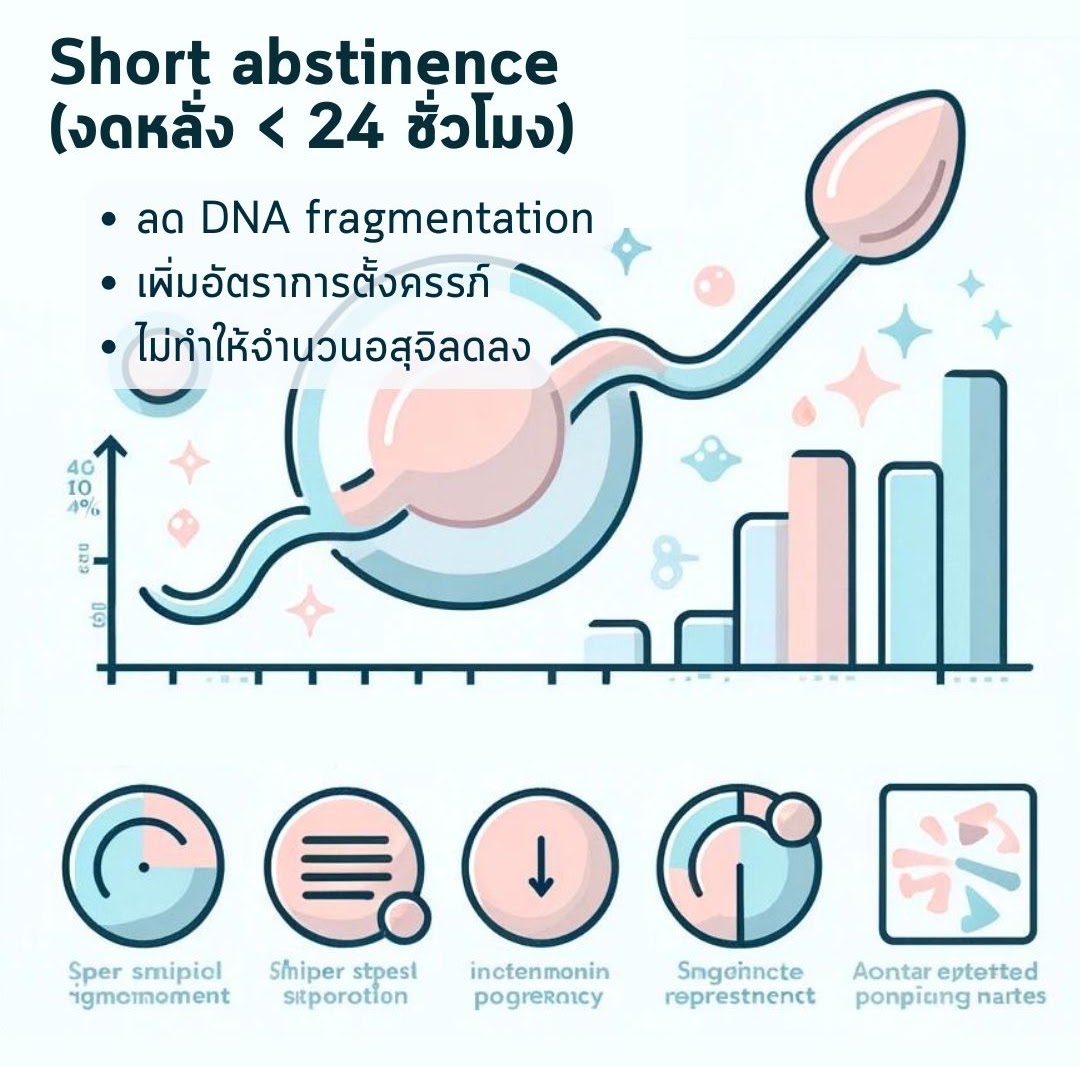
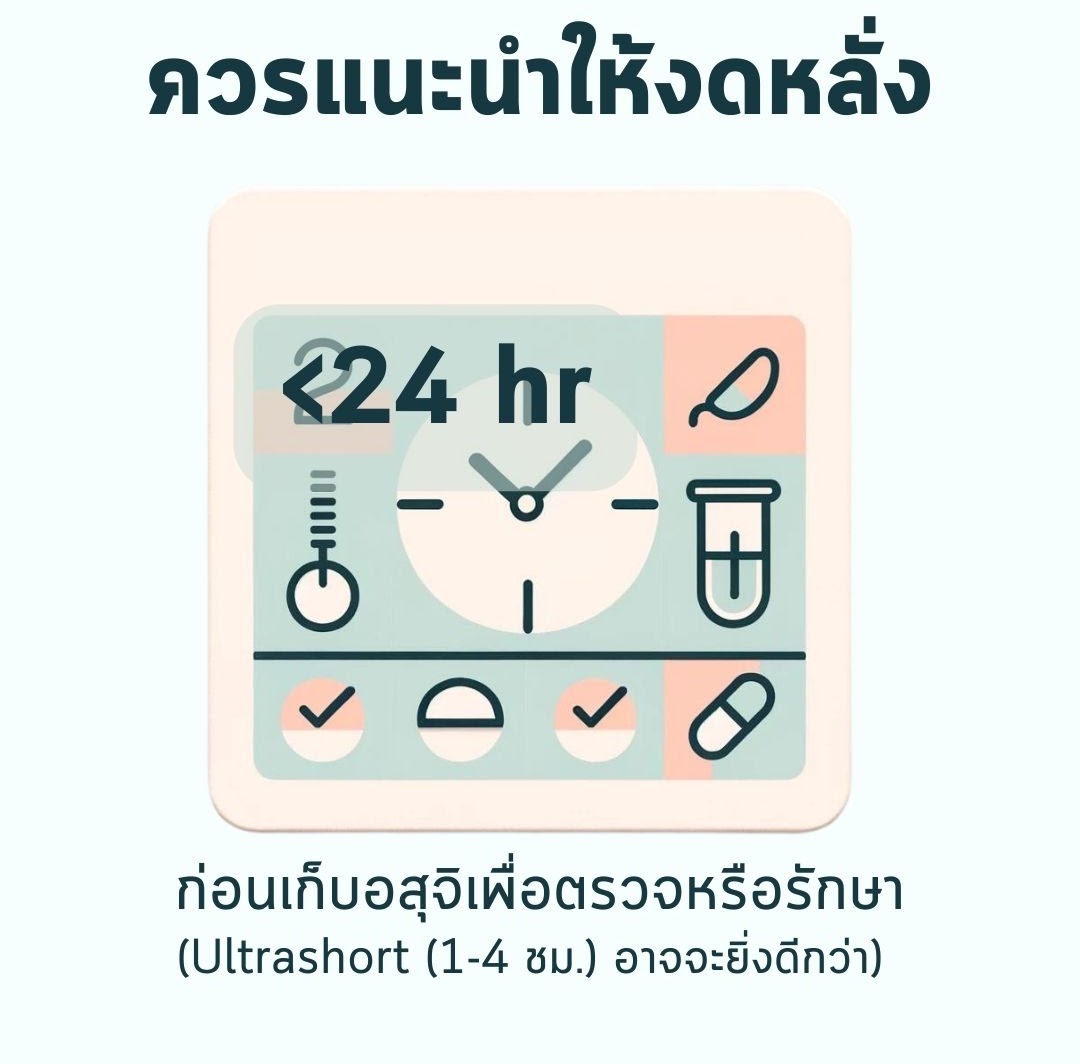
In addition, the available research, including observational studies, retrospective data and even RCTs, consistently shows that abstinence longer than 24 hours is associated with more DNA strand breaks (DNA fragmentation). This is linked to abnormal embryo division and lower pregnancy rates. Short abstinence (< 24 hours) and ultrashort abstinence (1-4 hours) lower DNA fragmentation step by step, without reducing the sperm count at all. (Many patients and doctors worry that frequent ejaculation will use up the sperm. This is not true, because the epididymis can store sperm for at least 6-10 days.) This is shown in Figure 4.
Figure 4 The effects of abstaining from ejaculation for less than 24 hours (short abstinence)
So I think we should advise patients who are coming to give a sperm sample, whether for testing (semen analysis) or for treatment such as IUI or IVF/ICSI, not to abstain for more than 24 hours. Personally, besides abstaining for less than 24 hours, I also recommend ejaculating every other day for 1 week beforehand, as shown in Figure 5.
Figure 5 Recommendations for preparing before giving a sperm sample
Summary
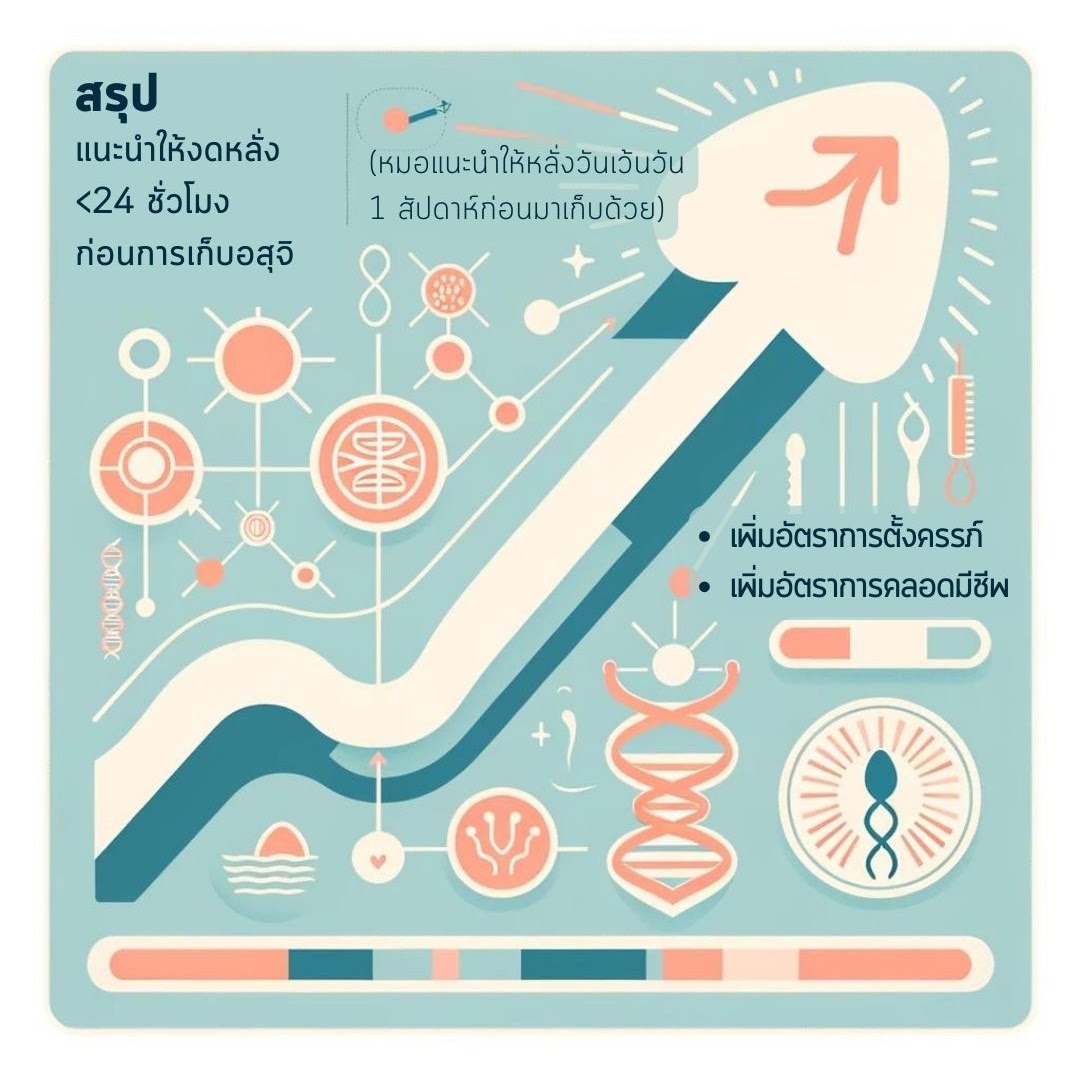
Based on moderate- to good-quality research, we should change how we advise patients to prepare before giving a sperm sample. Patients should abstain for <24 hours, because this helps lower DNA fragmentation and may help improve the embryo's chance of implantation and the chance of a live birth (Figure 6).
Figure 6 Summary of how to prepare before giving a sperm sample, and the results
References
Schlegel PN. We are giving the wrong patient instructions for semen analysis before assisted reproductive technology. Fertility and Sterility. 2024;121(3):426-427. doi:10.1016/j.fertnstert.2023.11.009
* This article is general health education. Diagnosis and treatment should be guided by your doctor. Results vary with age and individual medical factors.
Dr. Patsama Vichinsartvichai, MD, MClinEmbryol, EFOG-EBCOG, EFRM-ESHRE/EBCOG, FACOG is a board-certified reproductive endocrinology & infertility specialist, former head of the Vajira IVF unit at Navamindradhiraj University, and founder of LIFE by Dr. Pat in Bangkok. His published research focuses on the dysmorphic (T-shaped) uterus and uterine-factor infertility.
 LIFE by Dr. Pat