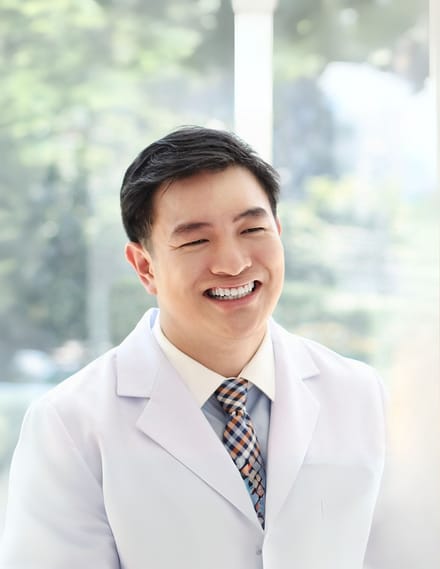
Dr. Patsama VichinsartvichaiMD, MClinEmbryol, EFOG-EBCOG, EFRM-ESHRE/EBCOG, FACOG
Diploma in Gynecologic Endoscopic Surgery, MClinEmbryol,
EFOG-EBCOG., EFRM-ESHRE/EBCOG.
About a thin uterine lining
Many patients have asked me about this, and it can get confusing, so today I'll explain.
Many patients have probably run into this problem: they prepare the uterine lining for embryo transfer, and no matter how much they prepare, it never gets thick enough. Sometimes there's even fluid pooling in the uterine cavity, even though our uterus doesn't share a drainage system with Bangkok. Why does this happen? Will it go away? Can the lining be prepared? How should it be treated?
-
First, we need to find out why it's thin, for example an abnormal uterus or adhesions inside the uterine cavity.
-
If it isn't a structural (anatomical) problem, we need to check whether the hormones used for preparation were unsuitable. Sometimes the starting dose is too high, which keeps the lining from getting thick.
If we suspect the preparation hormones, and the patient has regular periods and doesn't have PCOS, we can try a natural cycle to see if the lining gets thick.
- If the lining still isn't thick in a natural cycle, we may consider add-on treatments. These include:
-
PRP, made from the patient's own platelets. It has to be injected through a hysteroscope. Simply placing it inside the uterus doesn't work.
-
Mesenchymal stem cells (MSC) from umbilical cord blood. The principle is the same as PRP: these cells produce growth factors that make the uterine lining thicker and more receptive to the embryo. The advantage of MSC is that it acts longer and lasts longer than PRP. It also has to be injected under the uterine lining through a hysteroscope.
-
Endometrial scratching doesn't work. There's already plenty of research, and it shouldn't be done. If it's done poorly, it can cause adhesions. If you're going to scratch, scratch where it itches. If it doesn't itch, don't scratch it, or it'll flare up into a much bigger mess.
With love,
Dr. Patsama
* This article is general health education. Diagnosis and treatment should be guided by your doctor. Results vary with age and individual medical factors.
 LIFE by Dr. Pat