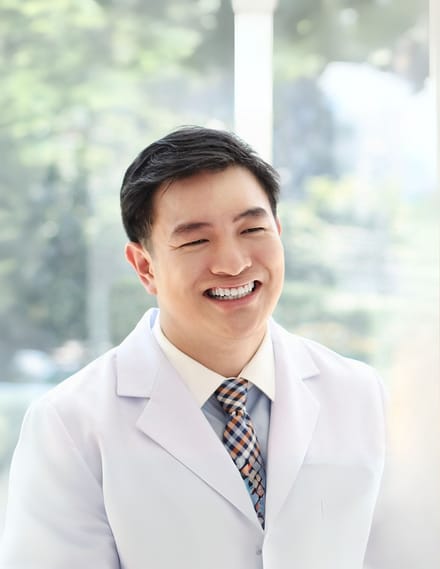
Dr. Patsama VichinsartvichaiMD, MClinEmbryol, EFOG-EBCOG, EFRM-ESHRE/EBCOG, FACOG
AI in the IVF Lab
Diploma in Gynecologic Endoscopic Surgery, MClinEmbryol,
EFOG-EBCOG., EFRM-ESHRE/EBCOG.
Over the past 2-3 years, artificial intelligence (AI) has clearly started to play a bigger role in our daily lives. You wake up and switch off the alarm on your phone, and you use Face ID, an AI that reads your face through the smartphone camera to confirm who you are accurately. You go to the bathroom to wash your face and brush your teeth, and you might use your voice to ask a smart speaker to play the news or music to wake you up. Its AI uses voice recognition, so you get the music you want quickly, and it responds only to the owner's voice, which keeps access to personal data secure. Over breakfast, you turn on a smart TV that suggests shows you are likely to enjoy or watch often, through AI that processes metadata with a neural network. You can also watch and understand programs in languages you don't know through AI real-time translation, using NLP (Natural Language Processing) and RNN (Recurrent Neural Networks). You haven't even left the house yet, and look how many AIs you have used.
Back to our own work: AI keeps moving steadily into it. Today I'm sharing the slides and video from my lecture "AI in the IVF lab", which I gave to the Thai Society of Reproductive Medicine on 15 November 2022 (B.E. 2565).
Leave a comment
* This article is general health education. Diagnosis and treatment should be guided by your doctor. Results vary with age and individual medical factors.
 LIFE by Dr. Pat