Intracytoplasmic Sperm Injection, explained clearly — how it works, who actually needs it, and what a boutique, physician-led ICSI clinic in Bangkok does differently.
ICSI (Intracytoplasmic Sperm Injection) is a laboratory technique used inside an IVF cycle. Instead of placing eggs and sperm together in a dish and letting fertilization happen on its own — as in conventional IVF insemination — an embryologist selects a single, healthy-looking sperm and injects it directly into the center of one mature egg using a microscopic needle, under high magnification.
ICSI doesn't replace IVF — it's a fertilization method layered onto a standard IVF cycle. The ovarian stimulation, monitoring, egg retrieval, embryo culture, and transfer steps are identical either way; only how the egg gets fertilized changes.
Conventional IVF: ~50,000–100,000 sperm placed with each egg in a dish; fertilization happens naturally. ICSI: one selected sperm injected directly into each mature egg by an embryologist. ICSI is now used in the large majority of IVF cycles worldwide because it removes the uncertainty of whether sperm can penetrate the egg on their own.
ICSI has clear, evidence-based indications. It's specifically recommended for:
Without a male-factor or lab indication, published evidence shows ICSI does not reliably improve live birth rates over conventional IVF insemination for every patient — its main proven benefit there is protecting against total fertilization failure, not boosting outcomes across the board. That nuance matters, and it's worth discussing directly with your physician rather than assuming ICSI is automatically the "stronger" option. See our evidence-based review of IVF add-ons for more on separating genuinely helpful interventions from ones with weak supporting data.
Daily injectable medication for approximately 8–12 days, with ultrasound and bloodwork monitoring to track follicle growth.
A trigger injection matures the eggs; retrieval under light sedation follows about 36 hours later, taking roughly 15–20 minutes.
Fresh collection or thawing of frozen/surgically retrieved sperm, followed by washing to isolate the healthiest, most motile sperm.
Under a high-magnification microscope, the embryologist injects one selected sperm directly into each mature egg.
Fertilization is confirmed the next morning; embryos are cultured for 3–5 days to reach the blastocyst stage.
A fresh or frozen blastocyst transfer follows, with remaining good-quality embryos frozen for future attempts.
Thailand is one of the most established destinations in Asia for IVF and ICSI, combining internationally trained physicians with costs a fraction of the US, UK, or Australia. But "ICSI in Bangkok" spans everything from large multi-doctor hospital fertility centers to small, physician-led boutique clinics — and the right fit depends on what you value:
See ICSI Package Pricing Book a Consultation
In conventional IVF, thousands of sperm are placed near each egg in a dish and fertilization happens on its own. In ICSI, an embryologist selects a single healthy-looking sperm and injects it directly into one mature egg. ICSI is a lab technique layered onto a standard IVF cycle — only the fertilization method differs.
Male-factor infertility, previous low/failed fertilization with conventional IVF, surgically retrieved or frozen sperm, and cycles combined with PGT-A genetic testing. Many clinics now offer it as the default for all patients since it produces more predictable fertilization rates.
Typically ฿180,000–฿450,000 per cycle depending on what's included. See our itemized IVF & ICSI cost guide and current package pricing for exact, transparent numbers.
For genuine male-factor cases, yes — fertilization rates improve meaningfully. Without a male-factor indication, evidence shows ICSI mainly protects against total fertilization failure rather than reliably improving live birth rates. Worth discussing directly with your physician.
Physician board certifications, whether you see the same doctor every visit, transparent all-inclusive pricing, the embryology lab's equipment and experience, and success rates reported by age group rather than one blended average.
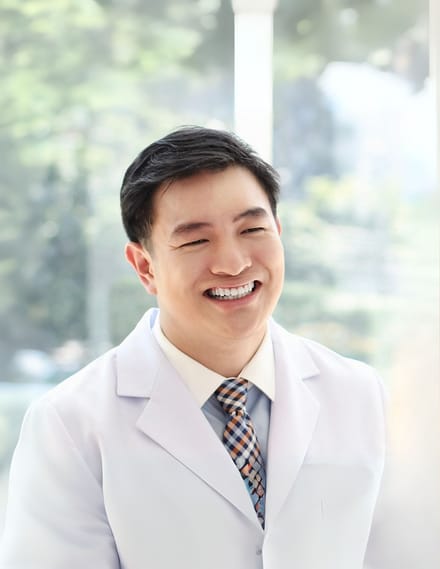
Dr. Patsama Vichinsartvichai, MD, MClinEmbryol, EFOG-EBCOG, EFRM-ESHRE/EBCOG, FACOG is a board-certified reproductive endocrinology & infertility specialist, former head of the Vajira IVF unit at Navamindradhiraj University, and founder of LIFE by Dr. Pat in Bangkok. His published research focuses on the dysmorphic (T-shaped) uterus and uterine-factor infertility.
Meet Dr. Patsama →